
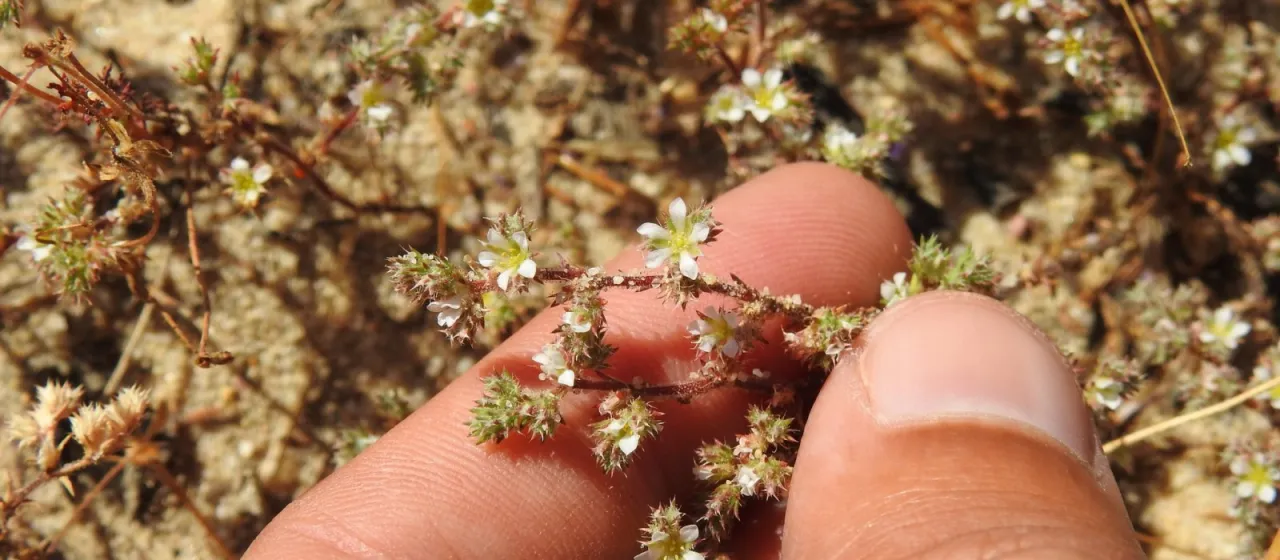
Description
Loeflingia baetica is a herbaceous plant species belonging to the Caryophyllaceae family. While it is not classified as a major agricultural crop in global commerce, it is a significant subject of study in botanical and agronomic research due to its presence in Mediterranean-type ecosystems and specific agricultural landscapes.
Originating from the Mediterranean basin, particularly the Iberian Peninsula, this plant has adapted to arid and semi-arid climates. Its habitat usually consists of sandy soils, dry meadows, and disturbed open areas where sunlight is abundant. These ecological niches dictate the plant's specific biological adaptations to survive periods of intense heat and seasonal drought.
Botanically, the plant exhibits a prostrate or ascending growth habit with narrow leaves and small, inconspicuous flowers. These traits are indicative of its evolutionary history in resource-limited environments. Its root system is relatively shallow, which is a common characteristic of annuals that complete their life cycle rapidly during the short rainy season characteristic of its native region.
Regarding cultivation and soil requirements, Loeflingia baetica thrives in well-drained, sandy, or stony substrates. It is highly sensitive to waterlogging and shade. From an agronomic standpoint, management of this species involves maintaining high crop competition and utilizing tillage techniques that prevent the establishment of small annuals in light-textured soils.
The economic use of this plant is strictly scientific or ecological, as it often serves as an indicator species for specific soil types. In terms of agricultural impact, farmers and researchers should focus on monitoring the following aspects to manage the plant effectively:
- Identifying soil conditions that favor its growth to optimize crop selection.
- Implementing mechanical weeding to reduce seed bank accumulation.
- Assessing potential overlaps with pests that affect other Caryophyllaceae crops.