Himalayan Luculia
Luculia gratissima (Wall.) Sweet
Description
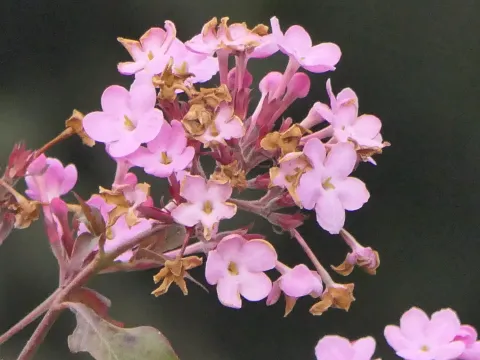
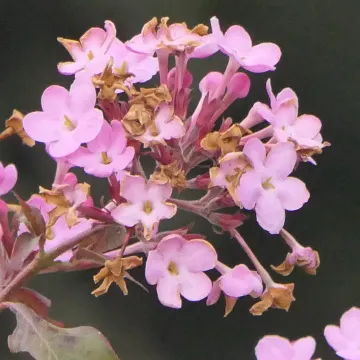
Luculia gratissima, commonly known as the Himalayan Luculia, is a captivating flowering shrub belonging to the Rubiaceae family. It is widely celebrated in horticulture for its clusters of intensely fragrant, tubular pink flowers that provide a late-season bloom when many other shrubs are dormant.
The species is native to the Himalayan mountain range, spanning countries such as Nepal, India, and parts of China. In its natural habitat, it thrives in cool, misty mountain forests, which dictates its preference for high atmospheric humidity and moderate temperatures throughout its growing season.
Botanically, it is a sturdy, semi-evergreen shrub that can reach significant heights under optimal conditions. Its foliage is characterized by deep green, elliptic leaves with prominent venation. The flowers are arranged in dense terminal cymes, releasing a powerful perfume that is highly valued for indoor and garden display.
Agricultural requirements focus on providing a rich, acidic, and well-draining substrate to prevent root rot. It is not cold-hardy and requires protection from frost, making it suitable for conservatory or greenhouse cultivation in cooler climates. Consistent watering is essential, especially during the active growth phases in spring and summer.
- Requires protection from direct midday sun.
- Thrives in a soil pH range of 5.5 to 6.5.
- Pruning after flowering encourages bushy growth.
- Susceptible to spider mites and aphids in sheltered conditions.
The primary horticultural use for this plant is as a decorative specimen in botanic gardens or as a seasonal feature in large containers. Proper management of pests like scale insects and maintaining an appropriate humidity level are the critical factors for ensuring the longevity and health of the plant.
Photo gallery