
Description
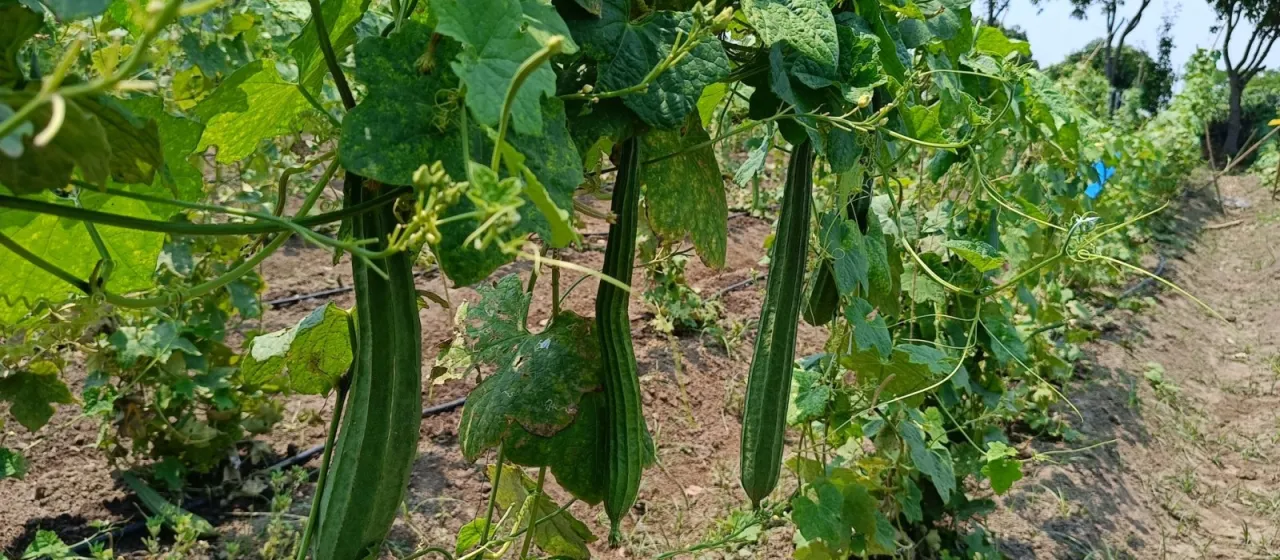
The angled luffa (Latin Luffa acutangula) is a herbaceous annual vine belonging to the Cucurbitaceae family. Often referred to as ridge gourd, it is easily distinguished from other species by the prominent longitudinal ridges running along its fruits. This plant is a vigorous grower, climbing rapidly using its specialized tendrils to scale supports in tropical and subtropical environments.
Originating from the tropical regions of Asia, specifically India, the plant is now cultivated globally in warm climates. As a tropical crop, it thrives in high temperatures and requires a long, frost-free growing season. In cooler regions, successful production typically necessitates starting seeds indoors or cultivating the plants within greenhouses to meet their heat requirements.
Botanically, the plant features large, five-lobed leaves and unisexual yellow flowers. The fruits are club-shaped, usually measuring 20 to 50 centimeters in length with ten sharp, distinct ridges. Unlike the cylindrical luffa, which is primarily grown for sponge production, this species is cultivated mainly as a vegetable crop, consumed when the fruits are young, tender, and green.
Cultivation requirements focus on providing well-drained, fertile soil rich in organic matter. The plant demands substantial sunlight and consistent soil moisture throughout its vegetative cycle. Farmers must ensure proper trellis systems are installed early, as the weight of the vines and developing fruits can be significant, potentially leading to damage if the plants are left to trail on the ground.
Beyond culinary use, where the fruits are popular in stir-fries, curries, and soups, the angled luffa has various industrial and traditional medicinal applications. Common pests affecting the crop include aphids, beetles, and fruit flies, while fungal issues like downy mildew and powdery mildew are significant concerns in high-humidity environments. Proper crop rotation and integrated pest management are essential for healthy yields.
- High demand for direct sunlight.
- Requirement for robust vertical supports.
- Extreme sensitivity to frost and cold snaps.
- Susceptibility to fungal leaf diseases.
- Critical need for timely harvesting of young fruits.