
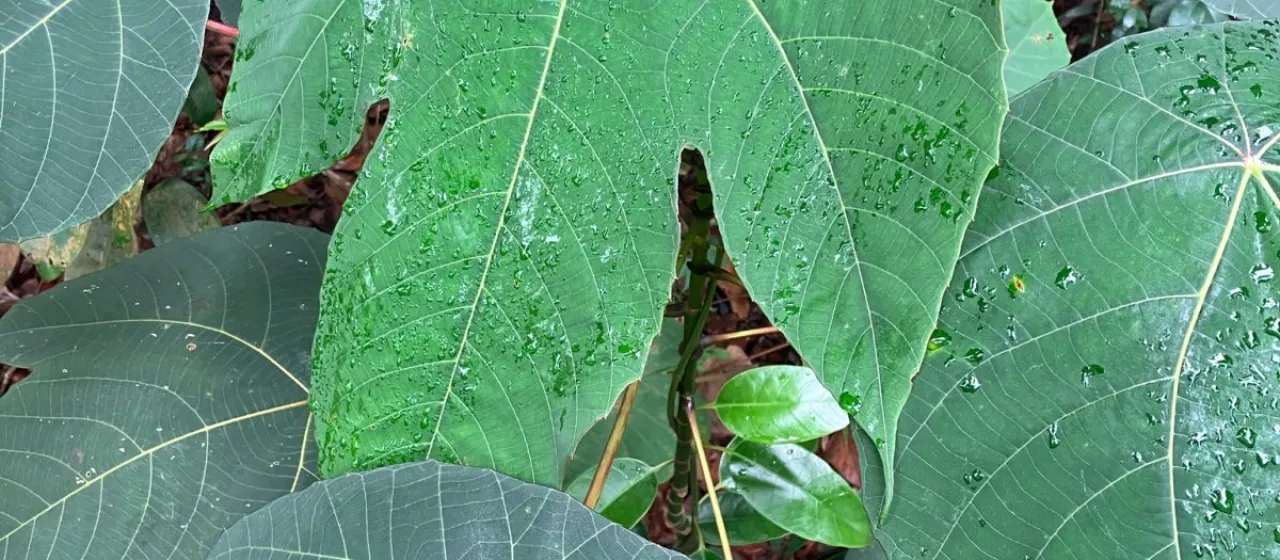
Description
Macaranga bancana is a fast-growing tree species belonging to the Euphorbiaceae family. It is widely recognized as a pioneer species, playing a critical role in the natural regeneration of tropical rainforests by quickly colonizing gaps and disturbed sites within the forest canopy.
The native distribution of this species spans the tropical regions of Southeast Asia, including Malaysia and Indonesia. It thrives in humid environments and is typically found in lowland dipterocarp forests or secondary forest formations where ecological succession is ongoing and sunlight exposure is abundant.
Botanically, the tree is noted for its broad, alternate leaves and specialized relationships with ants. These ants often inhabit hollow stems provided by the tree, offering protection against herbivores in exchange for shelter and secretions. This mutualism is a significant aspect of the plant's survival strategy in the competitive tropical landscape.
Regarding cultivation requirements, Macaranga bancana prefers warm, moist conditions with consistent rainfall throughout the year. While it is adaptable to various soil types, it performs best on well-drained, slightly acidic soils. Its rapid growth cycle allows it to establish canopy cover quickly, which helps suppress weeds and improves soil quality over time.
Economically, this species is valuable primarily in forest restoration projects and the biomass industry. Its soft wood can be utilized in the production of pulp, paper, and low-density fiberboards. By acting as a pioneer, it paves the way for slower-growing, more climax-oriented timber species, making it an essential asset for sustainable forest management.
- Rapid growth and biomass production
- Essential for ecological restoration
- Symbiotic relationship with ants
- Adaptability to various soil conditions
- Suitable for reforestation of degraded land