
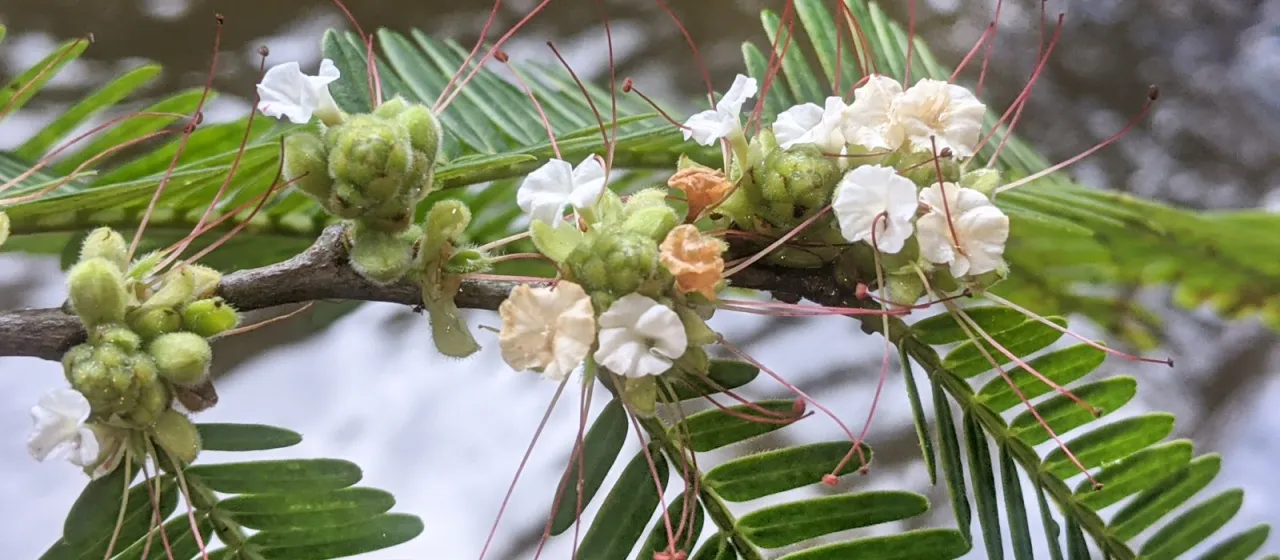
Description
Macrolobium acaciifolium is a prominent tree species belonging to the legume family (Fabaceae) and the subfamily Caesalpinioideae. This tropical tree is well-known for its unique ability to survive in the floodplains of the Amazon and Orinoco river basins, where it thrives in environments that are subject to seasonal submersion.
The native range of this species covers the tropical regions of South America, including countries like Brazil, Colombia, and Peru. It is a vital component of the gallery forests and igapó ecosystems. The plant has adapted specifically to the alluvial soils typical of these floodplains, where water levels fluctuate dramatically throughout the year.
Botanically, Macrolobium acaciifolium is distinguished by its pinnate leaves that bear a resemblance to acacia foliage, hence the specific epithet. The tree produces characteristic flowers that are well-adapted for pollination within the dense, humid rainforest environment. Its robust stem structure supports the tree through high-wind and flood events common in its habitat.
Agrotechnical requirements for the species are strictly limited to tropical conditions with high constant humidity and stable, warm temperatures. Successful cultivation relies on water management, as the roots are physiologically adapted to hypoxic conditions during flooding. Standard silvicultural practices involve careful selection of moist sites that mimic natural riparian zones.
Regarding its utility, Macrolobium acaciifolium is valued for its dense and durable timber, which is often used in local construction where moisture resistance is critical. Beyond timber production, the tree serves a crucial ecological function by stabilizing riverbanks and supporting local biodiversity. Like other tropical trees, it can be susceptible to specific pests, such as wood-boring beetles and fungal pathogens that thrive in consistently humid climates.