
Description
Malachra capitata is an annual herbaceous plant species belonging to the Malvaceae family. Widely recognized in tropical agriculture, it is primarily cultivated as a fiber crop. Its potential for producing strong bast fiber has made it an object of interest in various equatorial regions seeking alternatives to traditional jute and kenaf production.
Originating from the tropical regions of the Americas, this plant has spread across various tropical zones, including parts of Africa and Southeast Asia. Malachra capitata thrives in environments characterized by high humidity and consistent tropical temperatures. It is highly sensitive to cold stress, making it strictly a warm-weather crop that requires a long frost-free growing season to reach maturity.
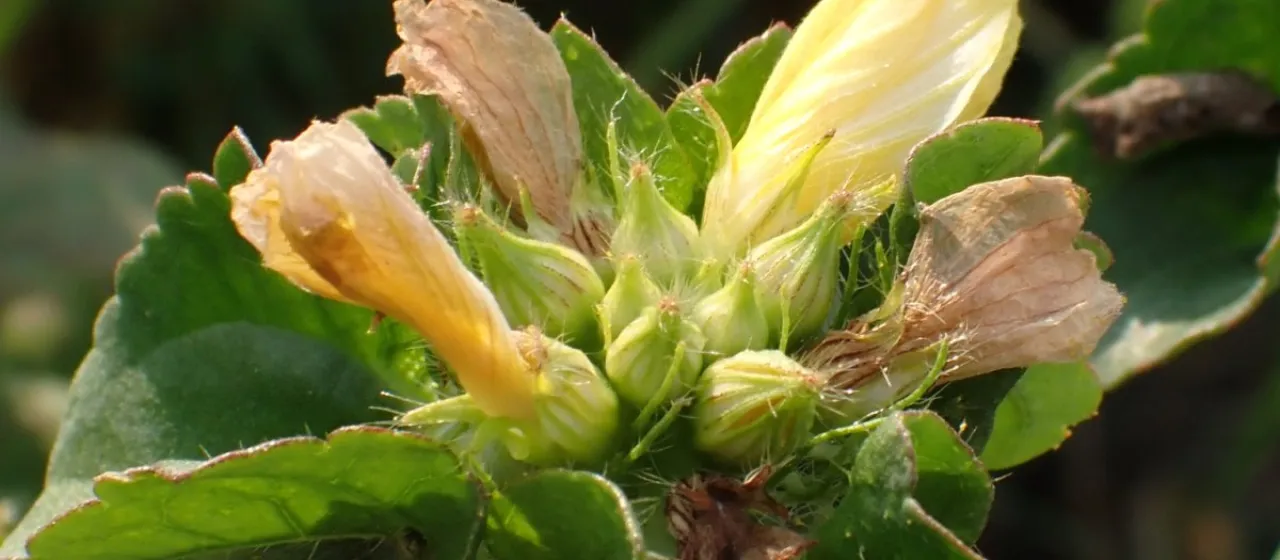
Botanically, the plant grows as an erect shrub, reaching heights of 1.5 to 2 meters. Its stems are robust and fibrous, supporting broad, heart-shaped leaves that are typically serrated at the margins. The most distinct feature is the inflorescence, where small flowers are densely clustered into head-like structures, which is the source of its specific epithet capitata.
Cultivation practices for Malachra capitata require specific soil and climatic conditions. It performs best in well-drained, fertile loamy soils with a pH ranging from neutral to slightly acidic. Effective management includes:
- Thorough field preparation to eliminate competing weeds.
- Optimal spacing to ensure maximum stem length and fiber quality.
- Consistent moisture supply, particularly during the initial vegetative growth phase.
- Strategic harvesting timing to balance fiber yield and tensile strength.
Economically, the plant is processed to extract high-quality bast fibers, which are utilized in the manufacturing of twine, sacks, and various technical textiles. Beyond fiber production, research is ongoing regarding its potential as a sustainable biomass source. Common pests include aphids and whiteflies, which require integrated pest management strategies to prevent yield loss and maintain fiber integrity throughout the growing season.