
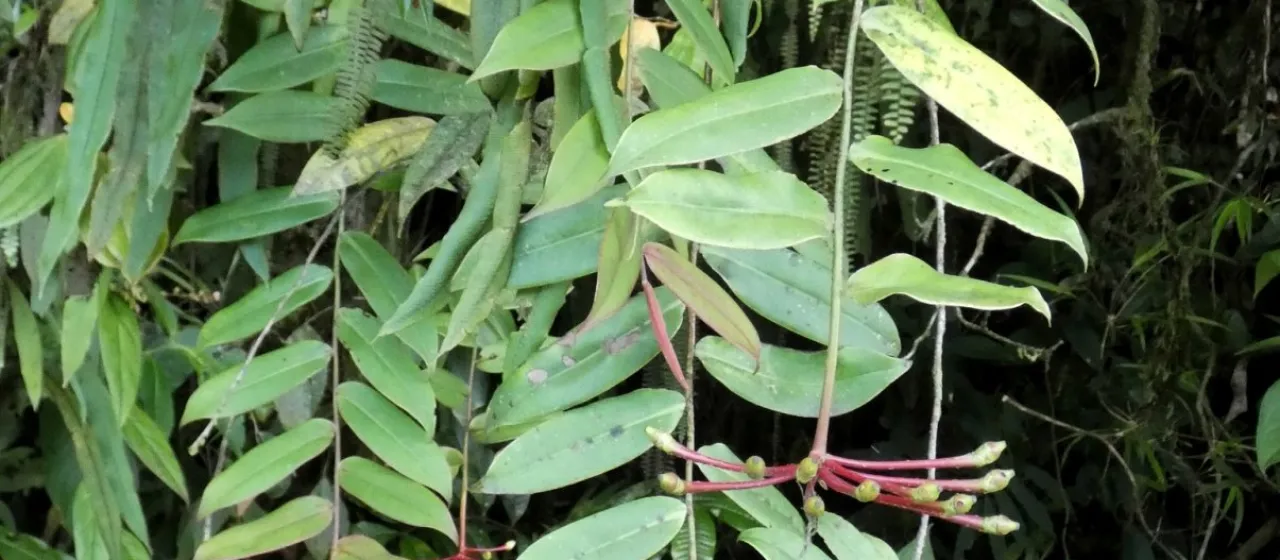
Description
Marcgravia brownei is a distinct woody vine belonging to the Marcgraviaceae family. Known for its climbing nature, this plant often exhibits epiphytic habits in its native habitat, utilizing larger vegetation as a scaffold to reach the canopy layer of tropical rainforests.
The species is indigenous to the tropical regions of the Americas. Its natural distribution is tied to high-humidity, high-rainfall forest ecosystems. In agricultural and horticultural practices, it is treated as a specialty crop, typically found in climate-controlled botanical conservatories and private tropical plant collections.
Botanically, Marcgravia brownei is recognized for its significant heterophylly. The juvenile form consists of small, shingle-like leaves that cling to surfaces, while the mature form develops larger, distinct foliage and specialized inflorescences. These flowers are evolutionary adaptations designed to attract specific avian and mammal pollinators in the wild.
Cultivation requirements for this species are strict. It demands high ambient humidity, ranging from 70% to 90%, and warm temperatures consistently above 20°C. The substrate must mimic an epiphytic environment: it should be light, airy, and moisture-retentive, typically composed of a mix of bark, perlite, and high-quality peat moss.
- Requires bright, indirect light to prevent leaf drop.
- Sensitive to water quality; prefers filtered or distilled water.
- Needs regular pruning to maintain compact growth in terrarium settings.
The primary use of Marcgravia brownei is ornamental, serving as a premium choice for paludariums and high-end vivariums. Common pests include spider mites, which flourish in dry conditions, and scale insects. Maintaining optimal airflow and hygiene is essential to prevent root rot and fungal infections, which are the most common health issues for this culture.