
Description
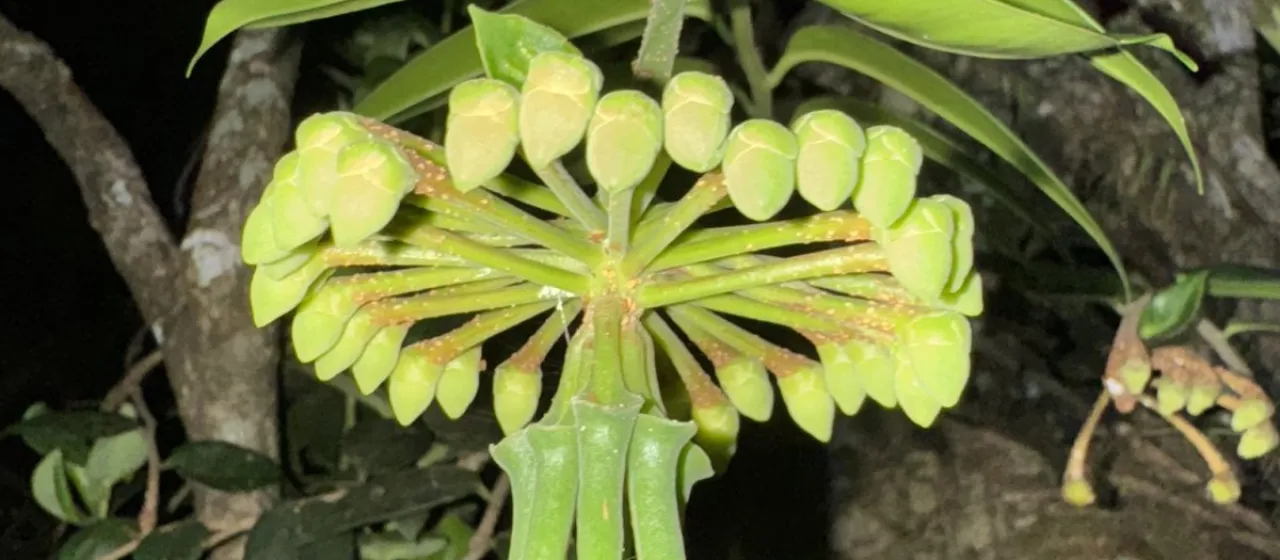
Marcgravia umbellata is a fascinating species belonging to the family Marcgraviaceae. It is a slow-growing, perennial vine that undergoes a significant metamorphosis throughout its lifecycle, transitioning from a juvenile stage with small, flat-pressed leaves to a mature stage that can climb high into the canopy.
Originating from the tropical forests of the Caribbean and parts of Central and South America, this plant is well-adapted to high-humidity, low-light environments. Its natural habitat includes dense forest floors where it creeps along the ground before climbing vertically on trunks and branches to find sunlight.
To successfully cultivate this species, growers must provide a consistently humid environment, ideally keeping humidity levels above 75%. The plant prefers a well-draining, nutrient-rich, and slightly acidic substrate, often enriched with orchid bark, perlite, and long-fiber sphagnum moss to mimic its natural epiphytic growing conditions.
Proper agricultural practices involve regular misting and ensuring that the plant has a sturdy, vertical surface to climb. While it thrives in bright, indirect light, direct sunlight can scorch its sensitive foliage. Maintenance also includes careful monitoring of water quality; using distilled or reverse osmosis water is highly recommended to avoid salt buildup in the roots.
In terms of practical use, Marcgravia umbellata is primarily utilized in vivarium and terrarium hobbies due to its aesthetic appeal and ability to create a "jungle" atmosphere. Typical challenges in its cultivation include the management of pests like mealybugs and scale insects, as well as maintaining adequate ventilation to prevent fungal infections and bacterial rots in high-humidity setups.