Broad-leaved paperbark
Melaleuca quinquenervia (Cav.) S. T. Blake
Description
Melaleuca quinquenervia, widely known as the broad-leaved paperbark, is a resilient tree belonging to the Myrtaceae family. It is easily identified by its distinctive, thick, papery bark that sheds in layers, providing a unique aesthetic appearance to the tree trunk.
The species is native to Australia, New Caledonia, and New Guinea, where it thrives in diverse environments, particularly in swamps and floodplains. Due to its natural habitat, it has developed an exceptional tolerance for waterlogged soils and seasonal flooding that would be fatal to many other tree species.
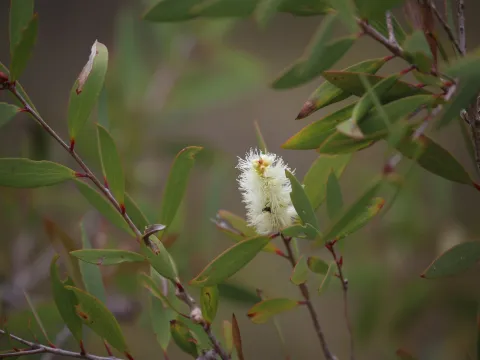
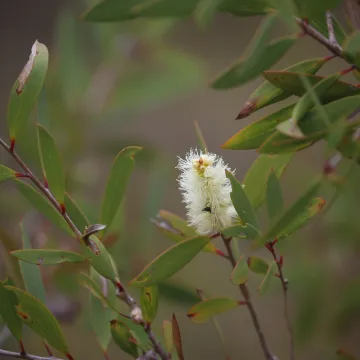
Botanically, the tree is recognized by its broad, lanceolate leaves that feature five distinct longitudinal veins. The flowers, which grow in creamy-white "bottlebrush" spikes, are highly attractive to bees and birds. It is an evergreen species that maintains its foliage throughout the year in suitable climates.
Cultivation requires a tropical or subtropical climate, abundant sunlight, and consistently moist soil conditions. While it is adaptable to various soil types, including acidic and saline ones, it requires protection from severe frosts in its early stages of development to ensure healthy establishment.
In terms of economic utility, the tree is primarily harvested for the production of niaouli oil, which is valued for its antibacterial and antiviral properties in aromatherapy. The timber is also used in construction due to its natural durability. Common pests include various wood-boring insects, while foliage diseases are generally managed by ensuring adequate airflow.
- Superior waterlogging tolerance.
- Source of essential niaouli oil.
- Important nectar plant for native bees.
- Fire-resistant adaptation features.
- Highly effective for land reclamation in wet zones.
Photo gallery