
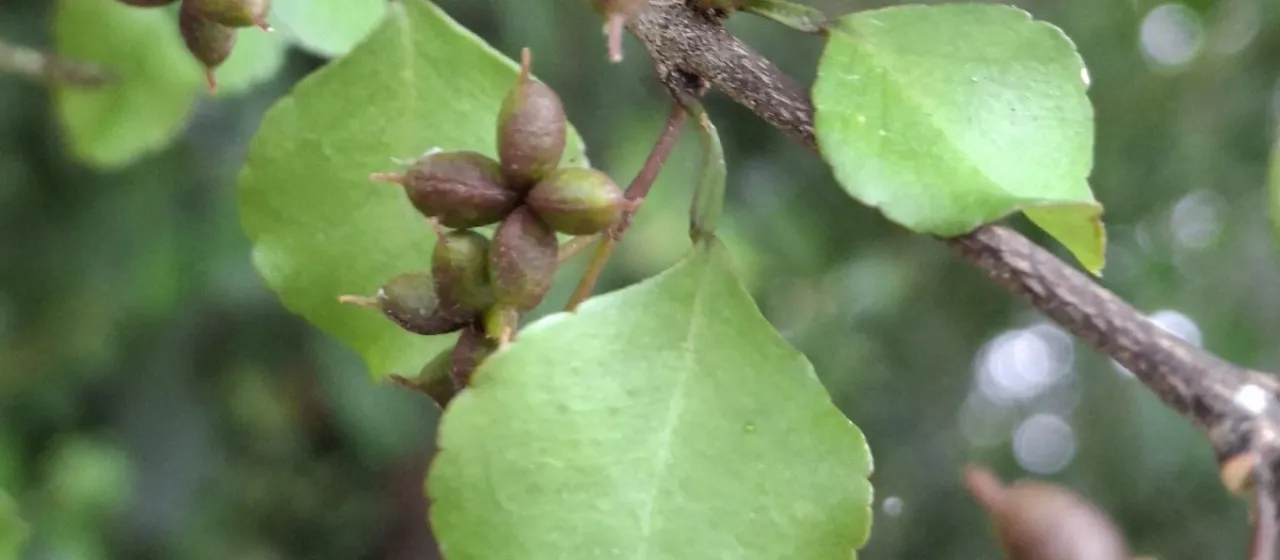
Description
Melicope simplex is an evergreen shrub or small tree belonging to the Rutaceae family. Native to New Zealand, this species is noted for its distinctive, often tangled branch structure and dimorphic foliage, which provides significant botanical interest for collectors and horticulturalists studying temperate flora.
The plant originates from the diverse ecosystems of New Zealand, spanning both the North and South Islands. It thrives in forested areas and shrublands, exhibiting a high tolerance for varied light conditions while preferring habitats that provide protection from excessive exposure and maintain moderate atmospheric moisture throughout the growing season.
Botanically, Melicope simplex is characterized by its small, opposite leaves and stiff, interlacing twigs, particularly in juvenile stages. The flowers are generally inconspicuous, small, and greenish-white or yellowish in color. Despite its humble appearance, the plant is a resilient component of its native habitat, capable of establishing itself in difficult soil conditions.
Cultivation requirements for this species include well-drained, nutrient-rich soils with a neutral pH level. As a member of the Rutaceae family, it demands consistent moisture levels but is highly susceptible to root rot caused by waterlogged soil. Proper site selection in a garden setting should focus on locations with sheltered exposure, providing enough light for healthy foliage development without scorching the plant.
In terms of management, the plant requires minimal pruning, primarily to maintain its structure or remove dead wood. Common pests include scale insects and mealybugs, which are typical for many Rutaceae species. Maintaining good airflow around the canopy and periodic monitoring are sufficient to prevent severe outbreaks and keep the shrub in a healthy state for its entire lifespan.