
Description
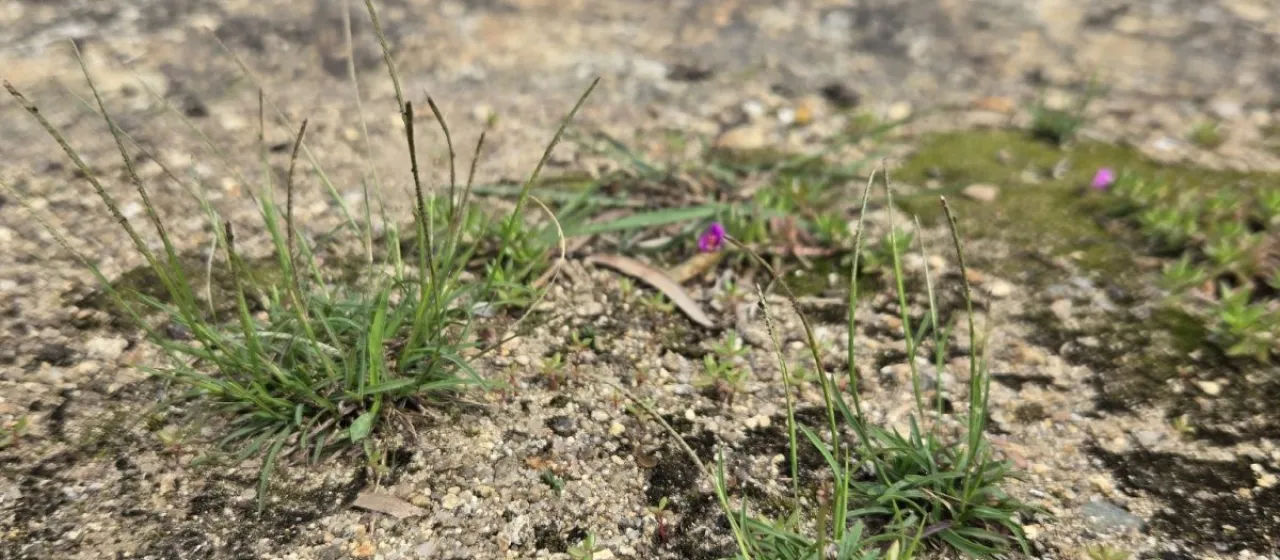
Microchloa indica is a species of grass in the Poaceae family, commonly known as a resilient, small-stature plant native to tropical and subtropical regions. It is widely recognized in agronomy for its remarkable ability to thrive in harsh, nutrient-poor, and arid conditions where traditional crops would fail to survive. This species serves as an essential component of local grasslands in Africa, Asia, and Australia.
The origin of Microchloa indica is closely tied to tropical environments. It typically grows in sandy soils, dry slopes, and areas recovering from land degradation. Its natural distribution is extensive, covering vast landscapes where environmental conditions, such as extreme heat and irregular rainfall patterns, limit the diversity of other plant life. The grass has successfully adapted to survive both drought and periods of seasonal flooding.
Botanically, this plant is characterized by its slender leaves and a distinctive, solitary, curved spike-like inflorescence. Its root system is relatively shallow but highly efficient at anchoring the plant in sandy substrates. As a tufted grass, it contributes to the formation of a dense ground cover, which is critical for protecting the topsoil from erosion caused by wind or heavy rainfall in tropical climates.
Regarding agrotechnical requirements, Microchloa indica is largely a low-maintenance, wild-growing plant. In an agricultural context, it does not require irrigation, chemical fertilization, or specific pest control measures. Its growth is primarily dictated by solar radiation and the moisture availability during the monsoon season. It is remarkably resilient to heavy grazing pressure, making it a reliable resource for livestock management.
The economic and agricultural utility of this species is focused on pasture grazing and land reclamation. It serves as a vital forage source for grazing animals in arid regions. Furthermore, its ability to quickly colonize degraded or burnt areas makes it an important species for ecological restoration and soil stabilization projects, helping to maintain landscape integrity in vulnerable tropical ecosystems.
- Excellent drought tolerance.
- Effective soil erosion control.
- Suitable for poor sandy soils.
- High resilience to overgrazing.