
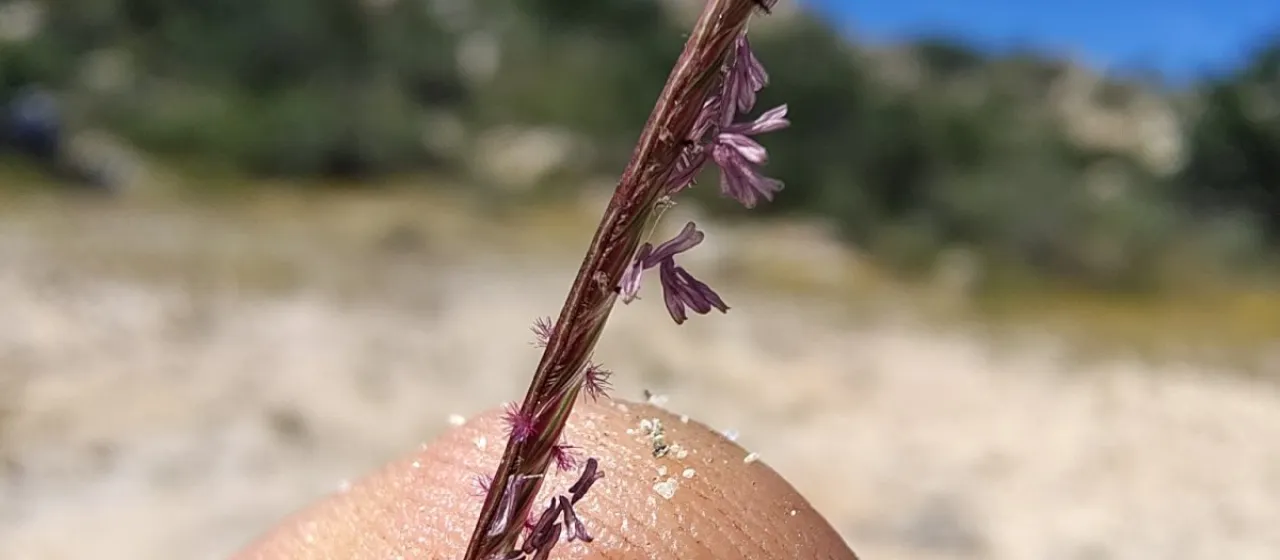
Description
Microchloa kunthii is a perennial grass species belonging to the Poaceae family, widely recognized for its resilience in arid and semi-arid environments. It typically grows in tufts, forming a dense sod that serves as a vital component of tropical grassland ecosystems. The species is known for its ability to thrive in challenging habitats where competition from other vegetation is minimal.
The origin and natural range of this grass span across the tropical and subtropical zones of Africa, Asia, and the Americas. It is commonly found in open habitats, including rocky slopes, dry savannas, and degraded lands. This plant is well-adapted to high-temperature regions and displays significant tolerance to prolonged dry seasons, making it a reliable perennial cover.
Botanically, Microchloa kunthii is characterized by its slender, often curved or sickle-shaped flowering spikes, which are unique to the genus Microchloa. Its leaves are typically narrow and folded, reducing moisture loss. The plant's architecture is focused on survival in nutrient-poor substrates, supported by a deep and fibrous root system that provides structural stability.
From an agricultural perspective, the cultivation of this grass is relatively simple due to its hardiness. It prefers well-drained, sandy or gravelly soils and thrives under full sun exposure. While it is not traditionally cultivated as an intensive crop, it is managed in extensive grazing systems. Proper soil management involves ensuring adequate aeration, as the species is sensitive to waterlogging, which can cause root decay.
The primary agricultural use of Microchloa kunthii includes pasture development and soil erosion control. Its dense root system and ground cover capabilities make it an ideal choice for stabilizing vulnerable slopes and restoring degraded lands. Additionally, it serves as a valuable forage source for livestock in regions where more sensitive pasture grasses fail to persist.
- Requires minimal irrigation.
- Excellent for soil stabilization on steep slopes.
- Adapted to poor, low-nutrient soils.
- Can be managed through controlled rotational grazing.
Regarding health and protection, the species is relatively resistant to major pests, though it may occasionally be affected by typical grass-related pathogens like rust fungi or certain foliage-feeding insects. Maintaining biodiversity within the pasture and avoiding overgrazing are the most effective management strategies to ensure the longevity and productivity of Microchloa kunthii stands.