
Description
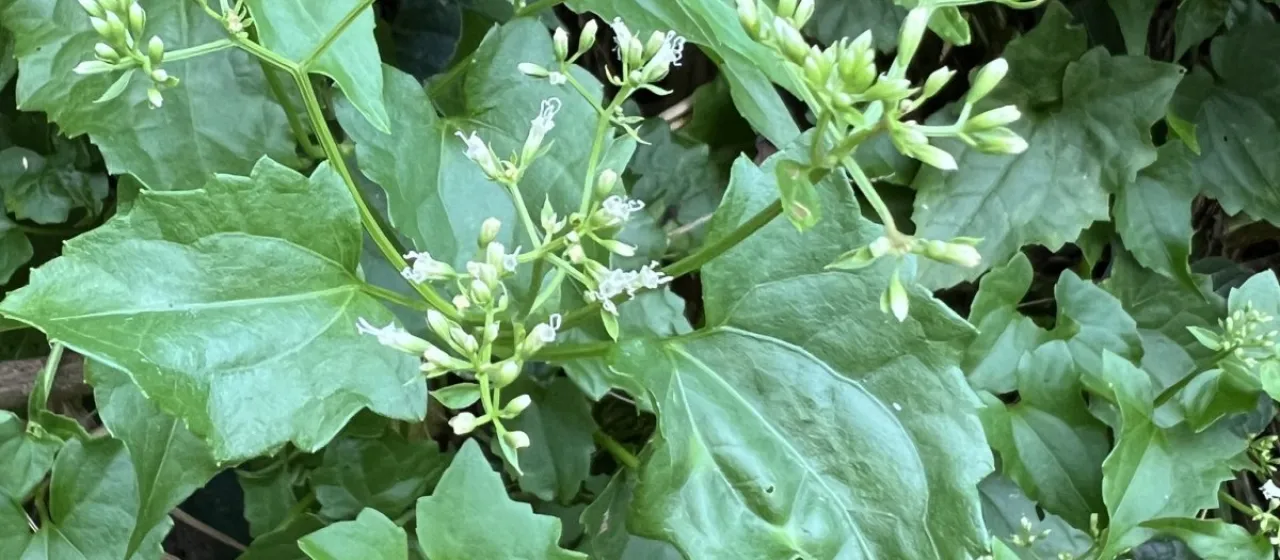
Mikania cordata is a perennial climbing plant belonging to the Asteraceae family. Known for its rapid vegetative growth, it is recognized as a significant crop in specific tropical environments. This plant is characterized by its vining habit, allowing it to colonize supports or ground surfaces efficiently within a short timeframe.
The origin of Mikania cordata is rooted in the tropical regions of Asia, specifically extending across India, Malaysia, and parts of China. It naturally thrives in moist forest edges and riparian zones. In terms of commercial cultivation, it is highly adaptable to warm climates that mimic these conditions, provided there is adequate moisture and nutrient availability.
Botanically, the plant is distinguished by its cordate (heart-shaped) leaves and opposite leaf arrangement. Its stems are slender, flexible, and often pubescent, supporting the rapid climbing mechanism of the plant. The flowers are arranged in small composite heads typical of the sunflower family, and the root system is fibrous and aggressive, ensuring stability and nutrient uptake.
Agronomic requirements for this crop focus on rich, well-draining soil with a high organic matter content. Regular irrigation is essential to maintain turgor pressure in the rapidly expanding vines. Proper spacing is a critical component of cultivation, as it prevents overcrowding and allows for optimal light penetration, which is vital for the photosynthetic efficiency of the canopy.
The industrial utility of Mikania cordata is primarily focused on the production of medicinal extracts containing bioactive phytochemicals. In agricultural management, it is sometimes employed for soil stabilization in tropical reforestation projects due to its fast coverage ability.
- Significant biomass production potential
- High demand for tropical humidity
- Resilience against various environmental stressors
- Vegetative propagation ease
Pathological concerns during cultivation include fungal infections in humid, stagnant air conditions and occasional infestations of spider mites or aphids. Agronomists recommend preventive canopy management and the use of integrated pest management (IPM) to maintain healthy yields without compromising the medicinal quality of the plant biomass.