
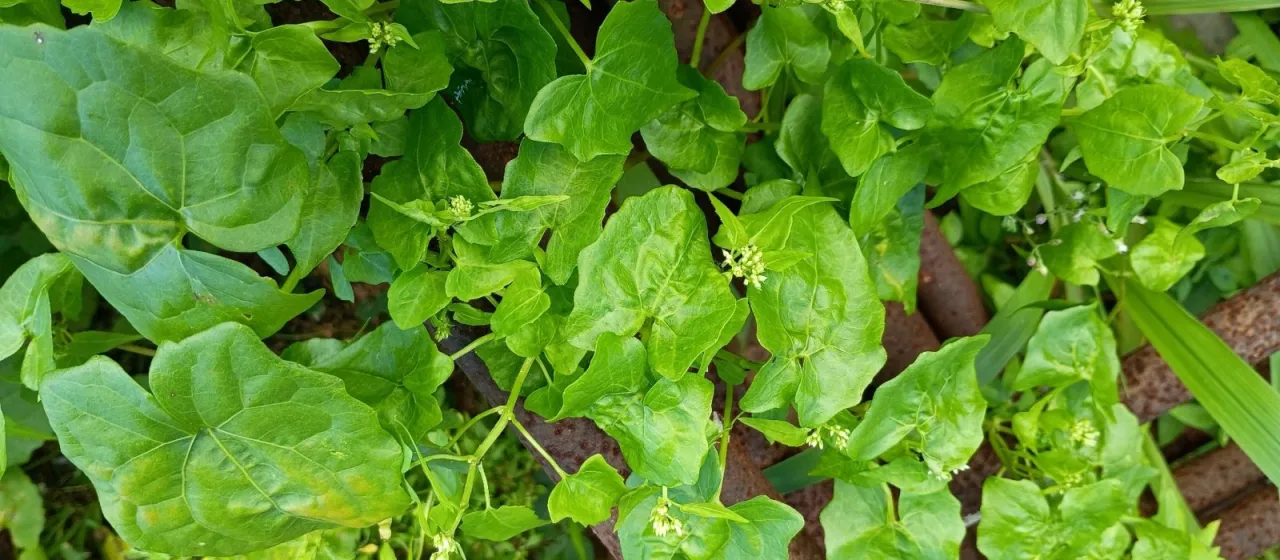
Description
Mikania micrantha Kunth is a perennial climbing plant belonging to the Asteraceae family. Known globally as one of the most aggressive invasive species, it is often referred to as the "mile-a-minute weed" due to its remarkably rapid growth rate, which allows it to overgrow and choke out agricultural crops and native vegetation in a very short period.
The plant originates from the tropical regions of Central and South America. Over time, it has spread extensively across tropical and subtropical zones of Asia, Africa, and the Pacific Islands. In these regions, it thrives in environments that mimic its native habitat, causing severe economic damage to plantations of tea, coffee, rubber, and various fruit-bearing trees.
Botanically, Mikania micrantha is characterized by thin, flexible stems, cordate leaves with dentate margins, and clusters of small white flowers. Its primary reproductive strategy involves both wind-dispersed seeds and vegetative propagation, where stem nodes develop roots upon touching the moist soil, effectively creating a sprawling network that is difficult to eradicate.
The plant thrives in humid tropical climates with high annual rainfall and constant temperatures. It is highly adaptable to a wide range of soil types, including poor or degraded soils, provided there is adequate moisture. Agricultural management involves a multi-pronged approach, including manual weeding, deep tillage, and the strategic application of systemic herbicides to penetrate the extensive root systems.
While the plant has little to no formal agricultural value as a crop, research is ongoing into its allelopathic properties, which could potentially be harnessed for natural weed suppressants. However, currently, the agricultural focus remains strictly on mitigation and containment. Pests and diseases are rarely effective in controlling its spread, as the plant exhibits strong resistance to local pathogens.
- Extremely high biomass production rate.
- Effective dual-mode reproduction (sexual and vegetative).
- High tolerance to various soil pH levels.
- Significant negative impact on biodiversity and crop yield.