Showy honey myrtle
Melaleuca nesophila F. Muell.
Description
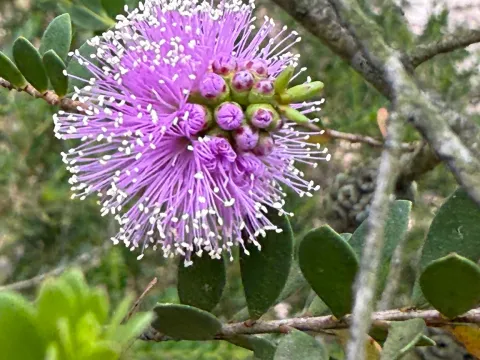
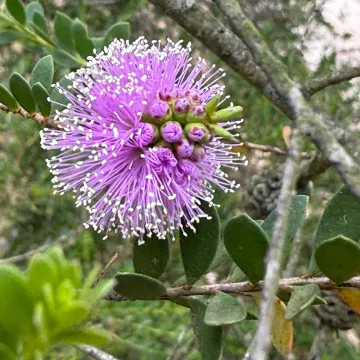
Showy honey myrtle, scientifically known as Melaleuca nesophila, is a robust evergreen shrub belonging to the Myrtaceae family. It is widely recognized for its stunning, globe-shaped, pinkish-purple flower clusters that bloom densely on the tips of its branches. This species is highly regarded for its aesthetic value and structural integrity in various landscape designs.
The plant originates from Western Australia, specifically favoring coastal and sandy regions. Its native range has influenced its high tolerance for wind and salt spray, making it an excellent choice for coastal horticulture. In cultivation, it thrives in Mediterranean-type climates, where it can be used as a specimen plant or as part of a dense hedging system.
Botanically, it features small, leathery foliage and a unique, fibrous, peeling bark that adds year-round visual texture. The root system is vigorous, allowing the plant to be quite drought-tolerant once established. It maintains a dense growth habit, which often requires periodic pruning to keep it within the desired shape and size for garden beds.
Agricultural requirements focus primarily on full sun exposure and well-draining soil types. It is essential to avoid waterlogged conditions, as the root system is susceptible to fungal rots if left in stagnant moisture. While it is adaptable to poor soils, incorporating moderate organic matter can improve plant vigor. Minimal fertilization is usually sufficient, as the species is well-adapted to nutrient-poor soils.
The primary use of this culture is ornamental, providing year-round foliage and seasonal floral displays. It also serves as a valuable habitat for local pollinators. Common pests include scale insects and mealybugs, which are typically managed through horticultural oils. Diseases are rare provided that proper airflow and drainage are maintained within the planting site.
Photo gallery