
Description
Minuartia biflora, commonly known as the two-flowered sandwort, is a herbaceous perennial plant belonging to the Caryophyllaceae family. It is a specialized botanical species highly adapted to the harsh climates of arctic and alpine regions, showcasing remarkable survival mechanisms in nutrient-poor environments.
The species is native to the circumpolar regions of the Northern Hemisphere, including the Arctic tundra and high-altitude alpine zones across Scandinavia, Russia, and North America. It typically thrives on gravelly slopes, riverbanks, and areas with thin, mineral-rich soils where moisture is available from snowmelt.
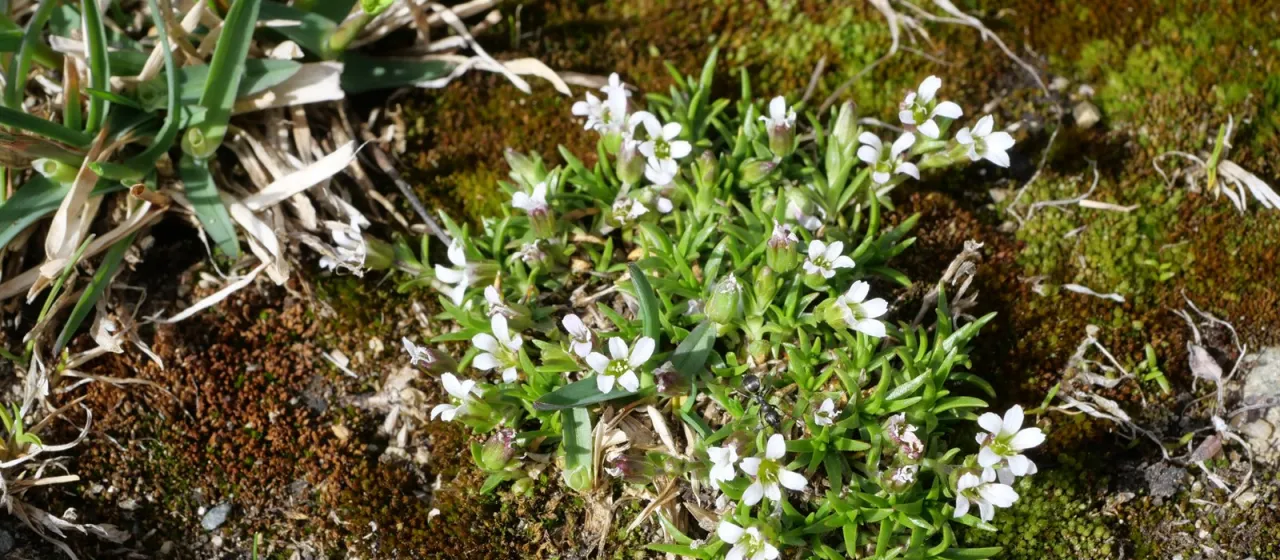
Botanically, the plant is characterized by a cushion-forming habit, typically reaching only 2 to 10 cm in height. The foliage consists of small, linear leaves arranged along ascending stems. The flowers are generally distinct, with white petals that are characteristically longer than the sepals, usually appearing in pairs at the terminal points of the stems.
Cultivation requirements focus on mimicking its natural alpine environment. The plant requires a well-draining, gritty, or sandy substrate with low organic matter. It demands full sun exposure and cool temperatures to thrive. Water management is critical; while it needs moisture during the growing season, stagnant water will quickly cause root rot and decay.
The primary use of Minuartia biflora is in ornamental horticulture, specifically for specialized alpine gardens and rockeries. While it is not a large-scale agricultural crop, its resilience to extreme cold and poor soil makes it a subject of interest for climate-resilient research. Typical pests and diseases are minimal, provided that drainage is sufficient and the environment mimics its cold-hardy, high-elevation habitat.