
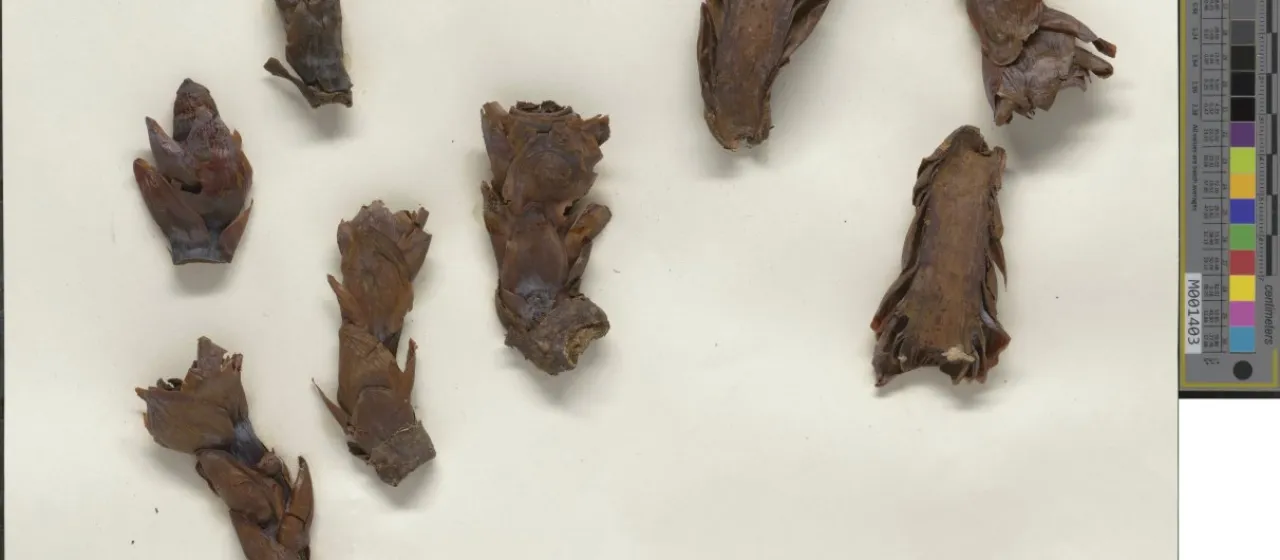
Description
Mitrastemon matudae is a rare and highly specialized holoparasitic plant belonging to the Mitrastemonaceae family. Unlike standard agricultural crops, this plant lacks chlorophyll and cannot perform photosynthesis. Instead, it relies entirely on its host tree, typically members of the Fagaceae family, to provide it with all necessary water, minerals, and organic nutrients through a complex internal root system.
The geographic distribution of Mitrastemon matudae is restricted to the high-altitude cloud forests of Central America, predominantly in Mexico and Guatemala. The plant thrives in humid, cool environments where the canopy provides sufficient cover. Because it is an obligate parasite that requires a living host and specific environmental conditions to survive, it has no history of commercial cultivation or agricultural utility.
Botanically, the plant is quite remarkable. The majority of its biomass exists as an endophytic system embedded within the host's roots. The visible portion of the plant consists primarily of flower spikes that emerge from the soil surface during the reproductive phase. These flowers have evolved to be highly attractive to specific pollinators, ensuring the continuation of the species despite its restricted range.
There are no agronomic practices for managing this species, as it is strictly a wild organism. The survival of Mitrastemon matudae is inherently linked to the health and abundance of its host trees. Conservation efforts focus on protecting the natural habitat of these forests, as the plant cannot be transplanted or grown in an artificial environment without the presence of an established and healthy host system.
The economic value of this plant is strictly biological and conservation-oriented rather than agricultural. It serves as an indicator of forest maturity and ecological health. Scientific research into this species helps us understand the complex interactions between parasites and hosts, as well as the unique evolutionary pathways that lead to complete dependence in plants.
Factors affecting the population of Mitrastemon matudae:
- Loss of original forest habitat.
- Decline of specific host tree species.
- Shifting rainfall patterns in mountain ecosystems.
- Disruption of the specific insect pollinators.