
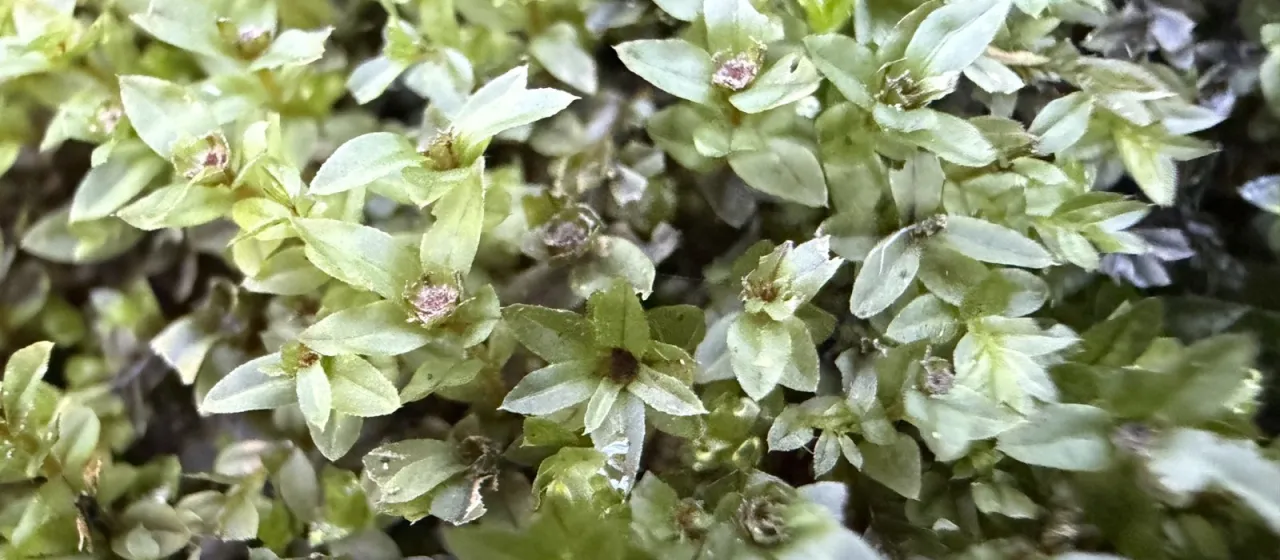
Description
Starry mnium (Mnium stellare) is a species of leaf moss belonging to the Mniaceae family. While not an industrial agricultural crop, it is a significant biological component of forest ecosystems, acting as a crucial ground cover plant that supports moisture regulation and soil protection in shaded woodland areas.
The distribution of this species covers a wide range of temperate regions in the Northern Hemisphere, including parts of Europe, North America, and Asia. It typically thrives in humid, shaded environments, colonizing nutrient-rich forest soils, the bases of tree trunks, and damp rocky substrates, where it contributes to the local micro-habitat stability.
Botanically, Starry mnium forms distinct, low-growing mats of bright to bluish-green color. The stems are erect and densely foliated, with leaves specifically adapted to maximize water absorption from the surrounding air. Reproduction occurs through spores produced in capsules on elongated stalks, a feature common to many mosses in this family.
Ecologically, the plant has strict requirements regarding its habitat. It favors neutral to slightly alkaline, nutrient-rich soils and cannot survive in conditions with low humidity or direct intense sunlight. In restoration ecology, the presence of Mnium stellare is often monitored as a sign of high environmental quality and stable forest micro-climate conditions.
- Effective moisture retention in woodland soils.
- Indicator species for forest health and air quality.
- Use in specialized botanical displays and terrariums.
- Protection of soil surfaces from erosion in shaded areas.
While the species does not face traditional agricultural pests, it is highly sensitive to environmental degradation. Habitat loss due to deforestation, water table depletion, and air pollution pose the greatest threats to its survival. Proper conservation requires maintaining natural forest density and protecting existing moisture-rich habitats from significant human disturbance.