
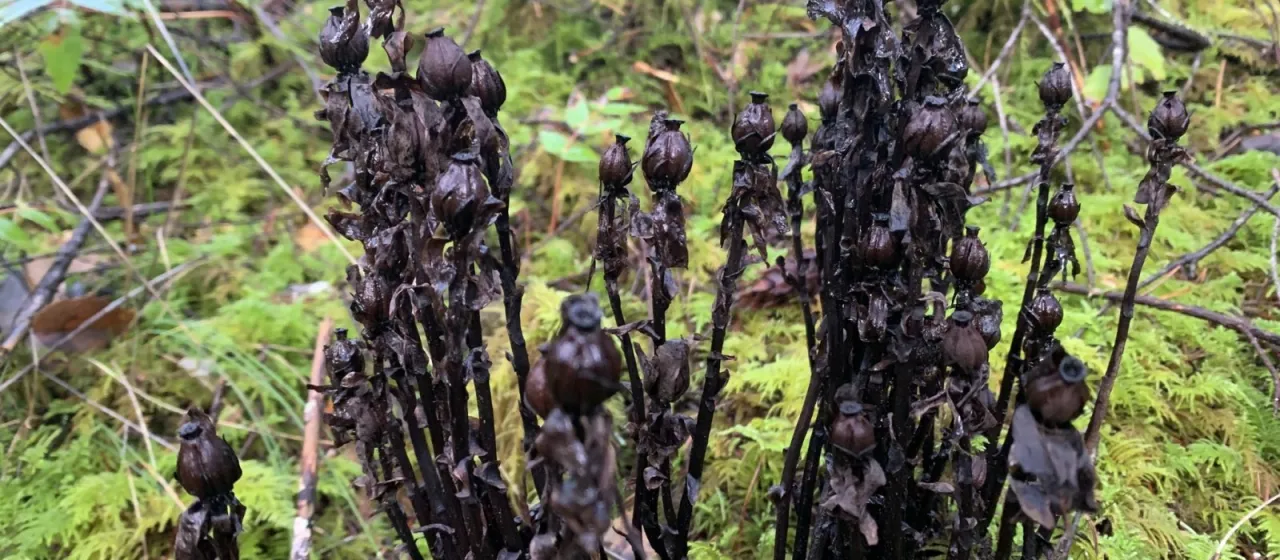
Description
Ghost plant (Monotropa uniflora), also commonly known as Indian pipe, is a perennial herbaceous plant belonging to the Ericaceae family. It is a striking example of a non-photosynthetic plant, lacking chlorophyll entirely, which renders it incapable of producing energy through sunlight.
The plant is native to temperate and tropical regions of North America, South America, and parts of Asia. It thrives in shaded, cool, and moist forest environments, typically found growing in rich leaf litter where the necessary fungal networks are abundant.
Botanically, Monotropa uniflora is a mycoheterotroph. Its survival strategy involves tapping into the mycelial network of mycorrhizal fungi, which are already associated with the roots of photosynthetic trees. This complex tripartite relationship allows the plant to flourish in low-light conditions where other vegetation struggles to survive.
There is no known agrotechnical method for cultivating the Ghost plant. It is entirely dependent on the specific biological balance of undisturbed forest soils. Attempts to transplant or propagate this species artificially have consistently failed because its existence is fundamentally tied to the health of the surrounding underground fungal and forest ecosystems.
In terms of agricultural use, this plant is not a commercial crop. Historically, some indigenous cultures used it for its medicinal properties, though it is not cultivated or harvested for modern industry. It does not suffer from typical crop pests or diseases, as its unique life cycle exists outside the sphere of standard agricultural cultivation and management.