
Description
Yellow bird's-nest (Monotropa hypopitys) is a fascinating herbaceous perennial plant belonging to the Ericaceae family. Unlike conventional crops, it is a myco-heterotroph, meaning it obtains its carbon and nutrients by parasitizing mycorrhizal fungi connected to the roots of nearby trees rather than through photosynthesis.
The plant originates from the temperate regions of the Northern Hemisphere, widely distributed across forests in Europe, Asia, and North America. It occupies a specialized niche, thriving in areas with thick leaf litter where the symbiotic relationship between fungi and trees is well-established, providing the essential host for the plant's survival.
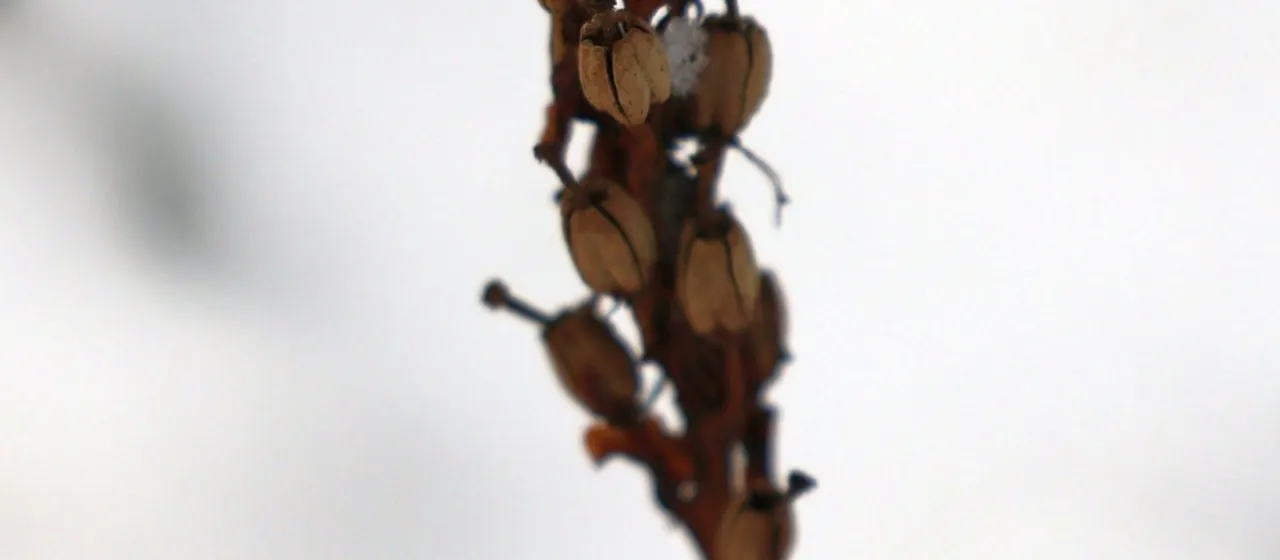
Morphologically, the plant is characterized by a succulent, pale yellow or cream-colored stem, ranging from 10 to 30 cm in height. It lacks chlorophyll entirely and displays scale-like leaves. Its inflorescence is drooping during the flowering phase and becomes erect as the dry, capsule-like fruits mature and release seeds.
There are no agricultural protocols for Monotropa hypopitys as it cannot be cultivated in traditional farming environments. Its life cycle is strictly bound to the presence of specific fungal networks and environmental soil conditions. Any attempt to transplant or farm the species invariably leads to its rapid death due to the loss of the fungal connection.
While the plant has historical uses in folk medicine, it is not an economic crop. It does not suffer from typical agricultural diseases or pests such as rusts or beetles common in commercial crops. Instead, it is an integral part of the forest floor ecosystem, and its preservation depends entirely on the protection of old-growth and undisturbed forest habitats.