
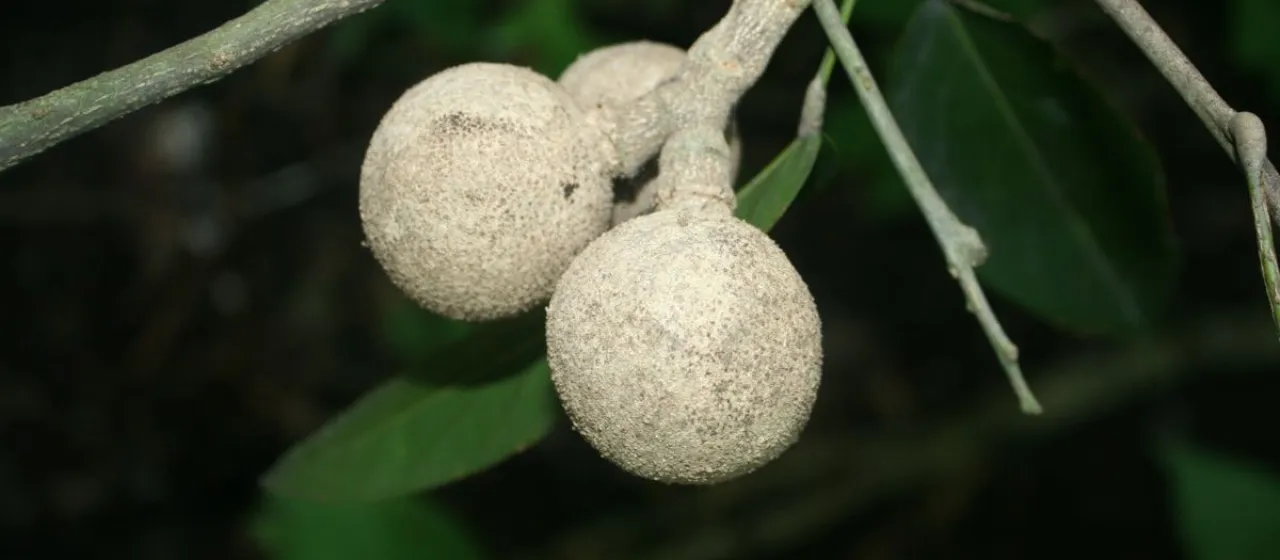
Description
Morisonia americana is a perennial woody plant belonging to the Capparaceae family. Often recognized as a distinct tropical species, it grows as a small-to-medium-sized tree, characterized by its resilient nature and adaptability to specific subtropical and tropical environments.
The native range of this species spans across Central and South America and the Caribbean region. It thrives in lowland tropical forests and coastal areas where the climate provides stable warm temperatures and distinct seasonal rainfall, which are crucial for the development of its vegetative cycles.
Botanically, the plant is distinguished by its leathery, simple leaves and showy flowers that often appear in clusters. Its fruit structure is adapted for dispersal in tropical environments, containing seeds protected within a fleshy pulp. This evolutionary adaptation allows the species to propagate efficiently in its endemic habitats.
Agronomic requirements center on well-draining soil with a balanced nutrient profile. The species is highly sensitive to frost and cold stress, necessitating protection in climates where temperature fluctuations are significant. Providing a sunny, sheltered location is essential for maximizing growth and ensuring the health of the plant throughout the growing season.
In terms of economic and practical utility, Morisonia americana is largely utilized in local landscaping and small-scale ethnobotanical contexts. While it is not a widespread commercial commodity, its hardiness makes it a subject of interest for local agricultural development. Common plant health issues include fungal root rot triggered by poor drainage and infestations by tropical insects, which are managed through standard integrated pest control practices.