
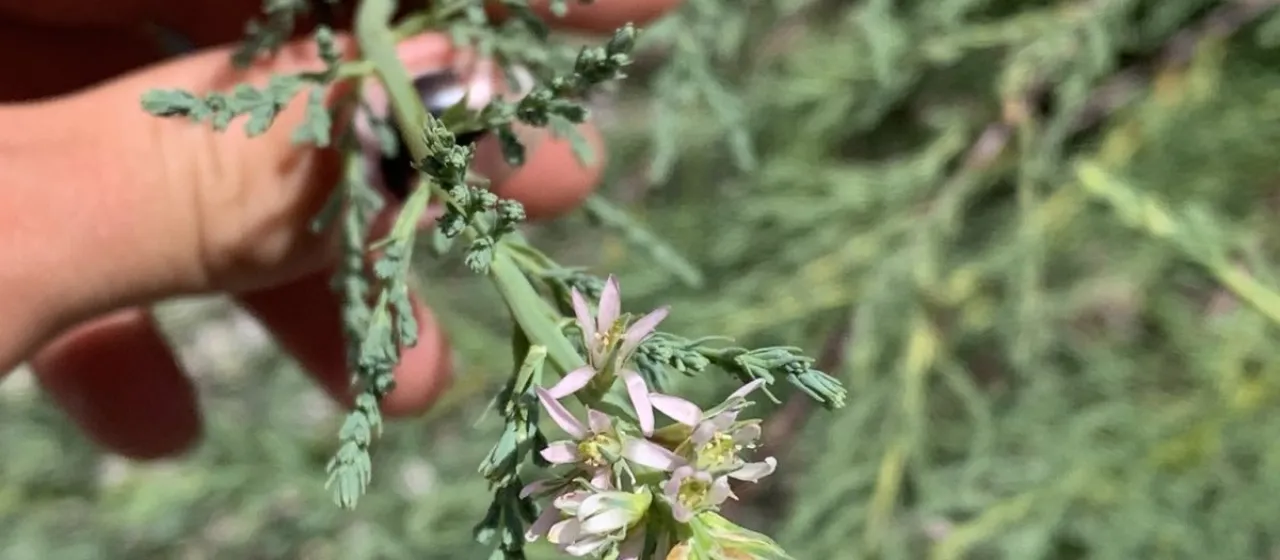
Description
German tamarisk (Myricaria germanica) is a deciduous shrub belonging to the Tamaricaceae family. Often mistaken for a conifer due to its thin, scale-like leaves and slender branches, it is actually a flowering plant. This hardy shrub typically grows to a height of 1 to 2 meters, providing a distinctive and airy texture to any planting area.
This species is native to Central and Southern Europe, as well as parts of Western Asia. Its natural habitat includes riverbanks, gravel bars, and rocky floodplains. Because of its evolutionary history in these dynamic environments, the plant is exceptionally well-adapted to unstable soils and periodic inundation, making it a valuable tool for ecological site restoration.
Regarding climate and soil, German tamarisk thrives in full sunlight and requires moist, well-draining soils with a significant mineral content. It is highly cold-hardy, capable of surviving harsh winters, but it struggles in completely dry environments. Growers should prioritize sites with sandy or gravelly substrates that mimic the plant's natural riverine conditions.
Agrotechnical management primarily involves controlled pruning to prevent the shrub from becoming overly leggy. Propagation is most efficiently achieved through cuttings during the active growth season. While the plant is inherently rugged, maintaining a balance in soil moisture is crucial, as both extreme drought and prolonged water stagnation can weaken the specimen over time.
The primary horticultural use of Myricaria germanica is in riverbank stabilization, erosion control, and ornamental landscape design, particularly in rock gardens or naturalistic riparian zones. While it is generally resistant to many pests, growers should monitor for aphids and powdery mildew. Effective management ensures the plant maintains its unique aesthetic and structural integrity throughout the growing season.