
Description
Myricaria squamosa is a deciduous perennial shrub belonging to the Tamaricaceae family. Although it is a flowering plant, its foliage is notably scale-like and densely packed along the stems, giving it an appearance similar to conifers, which makes it a unique addition to any horticultural collection.
The plant originates from the mountainous and riparian regions of Central and East Asia, specifically thriving in China and Mongolia. It is typically found in wild habitats such as gravelly riverbanks and stony slopes. Its natural resilience to harsh environmental conditions makes it a highly sought-after plant for landscaping in diverse climate zones.
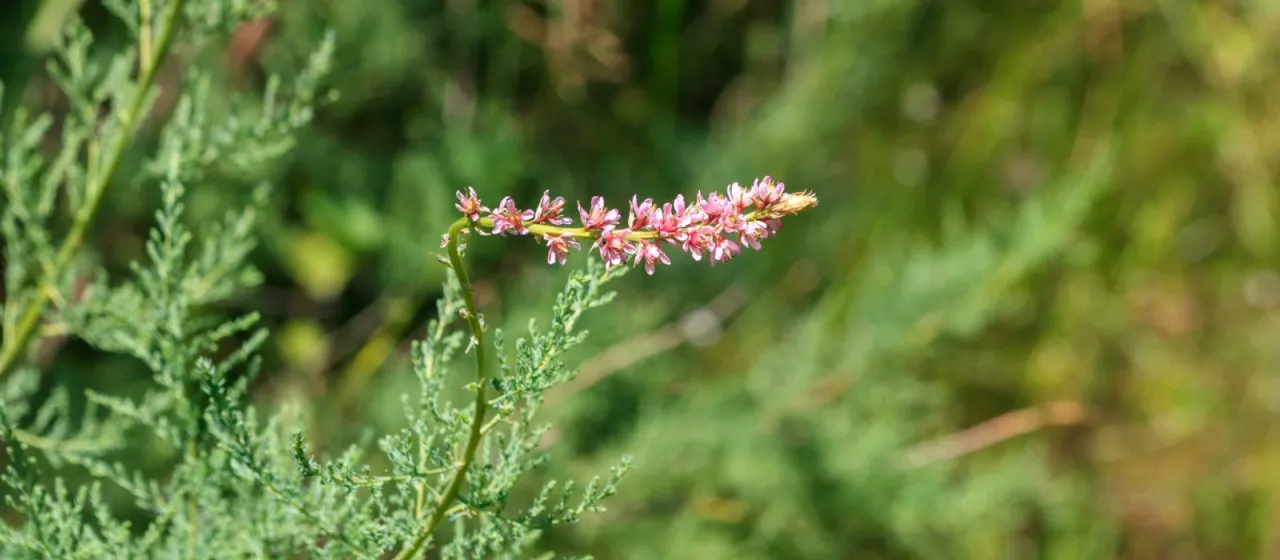
Botanically, the plant features arching stems that can reach a height of two meters. The foliage is small, bluish-green, and imbricate, creating a delicate, airy texture. During the summer months, the shrub produces terminal racemes of pink or pale violet flowers, which are highly attractive to pollinators and add aesthetic value to the garden.
Cultivation requires a sunny location with well-draining soil. Myricaria squamosa is highly tolerant of poor soil conditions, including rocky or sandy substrates, provided there is no stagnant water. Key maintenance practices include regular pruning to keep the shrub compact and encourage flowering, as well as light fertilization in early spring to support active growth.
In terms of agricultural and landscape use, it is primarily employed for erosion control on slopes and as an ornamental feature in rock gardens or waterfront designs. It is generally resistant to most pests; however, improper drainage can lead to root rot. If healthy conditions are maintained, it remains a robust and long-lived specimen in both residential and public garden settings.