
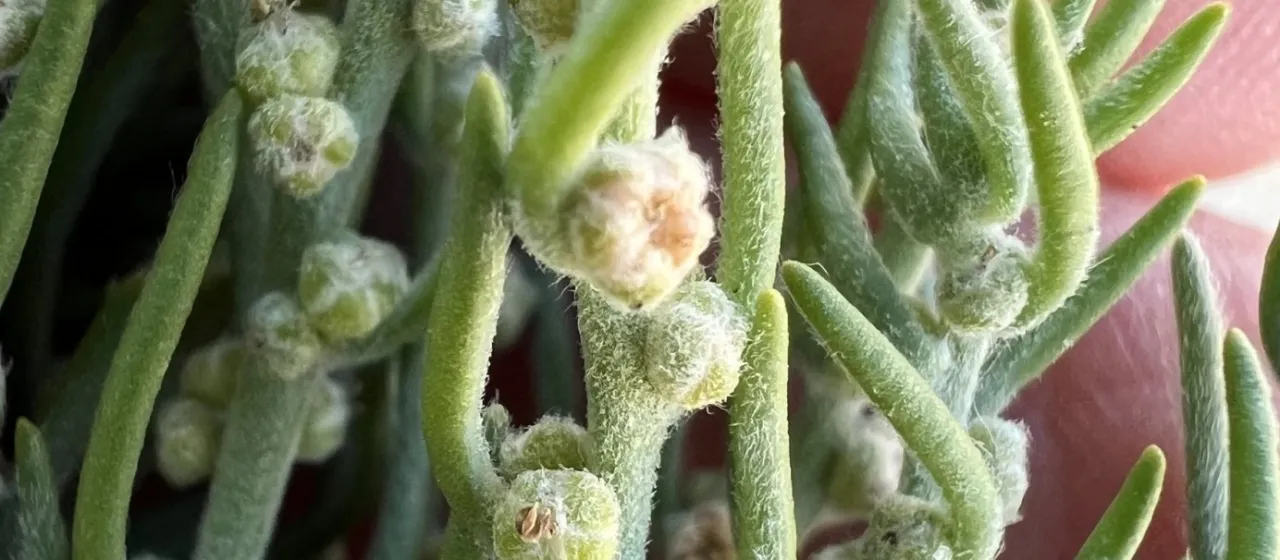
Description
Neokochia americana is a perennial subshrub belonging to the Amaranthaceae family. It is a highly specialized halophyte, evolutionary adapted to survive in extreme saline environments, such as dry lake beds, desert basins, and arid rangelands throughout North America.
The plant originates from the arid regions of the Western United States. Its natural distribution is closely tied to soils with high pH levels and significant concentrations of soluble salts. Because of its resilience to these harsh conditions, it is widely recognized by researchers as a key species for the restoration of degraded arid landscapes and saline rangelands.
Botanically, Neokochia americana is characterized by its succulent, glaucous leaves which are specifically adapted to minimize transpiration. The plant grows as a low-stature shrub, usually reaching 30 to 50 centimeters in height. Its deep taproot system is essential for accessing moisture deep within the desert soil profiles, allowing it to maintain metabolic activity during prolonged drought periods.
The cultivation requirements are centered on full sun exposure and well-drained, alkaline soils. It does not require irrigation, making it an economically viable option for arid land reclamation where traditional irrigation is impossible. Standard agronomic practice suggests minimal soil disturbance during the establishment phase to preserve native seed banks and soil structure.
The primary agricultural use of this plant is as forage for livestock, particularly sheep and goats, in semi-arid zones. It provides essential nutrition when other forage sources are depleted. Regarding health, the plant is generally robust; however, management must monitor for:
- Root rot pathogens if drainage is compromised.
- Specific desert insect infestations during peak growth seasons.
- Overgrazing, which can lead to thinning of the population.