
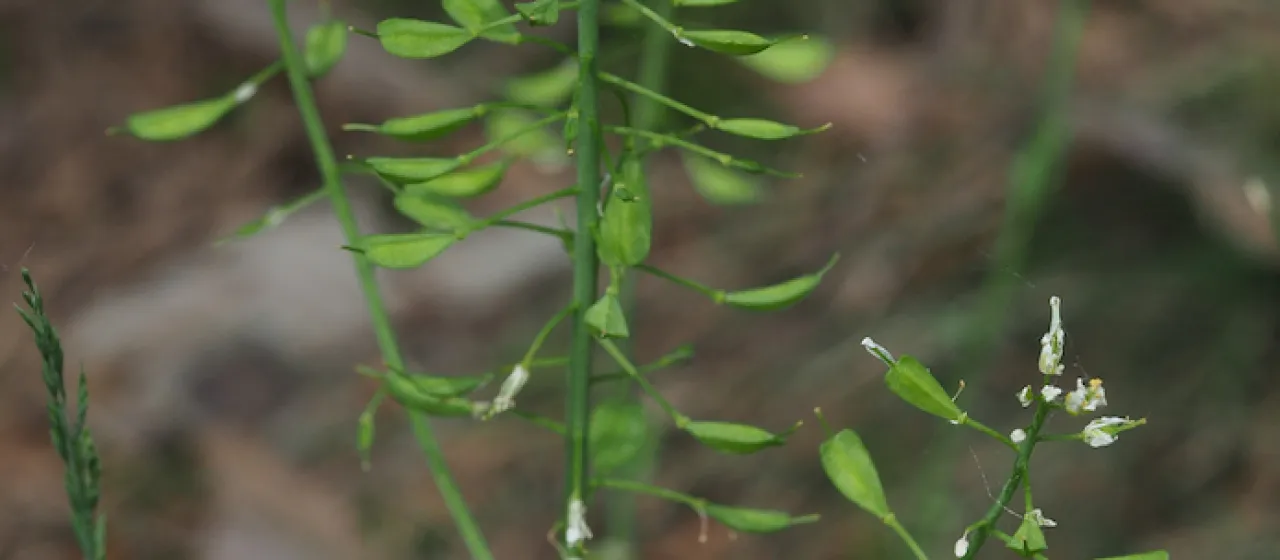
Description
Noccaea goesingensis is a perennial herbaceous plant belonging to the Brassicaceae family. It is widely recognized in scientific circles as a remarkable nickel hyperaccumulator, possessing an extraordinary ability to extract and store heavy metals from the soil within its tissues. This unique physiological trait positions the plant as a significant subject for modern ecological engineering.
The native habitat of this species is restricted to specific mountainous regions in Austria, particularly in the vicinity of Gössing. It has evolved to thrive on ultramafic (serpentine) soils, which are typically toxic to most agricultural plants due to their high heavy metal concentration. This evolutionary adaptation allows it to flourish where other species fail to germinate.
Botanically, the plant grows in a compact rosette form with specialized leaves that facilitate the efficient uptake and sequestration of metallic ions. During the growth cycle, it produces small, characteristic flowers typical of the mustard family. Its root system is specifically adapted to explore mineral-rich substrates while maintaining stability in thin, rocky alpine soils.
Cultivation of this species requires specialized agricultural practices aimed at managing metal-rich substrates. Proper care involves selecting appropriate soil media, ensuring adequate light exposure, and precise moisture management. Unlike food crops, its growth parameters are tuned to maximize metal uptake, making it a functional component of ecological restoration schemes rather than a traditional harvestable crop.
The хозяйственное (economic) utility of Noccaea goesingensis is centered on environmental services and research applications:
- Phytoremediation of soils contaminated by mining activities.
- Phytomining: the extraction of nickel from the plant's biomass.
- Use as a bioindicator for soil quality and heavy metal levels in mining zones.
While highly resistant to the harsh chemistry of its native soil, the plant can be susceptible to common cruciferous pests and diseases when introduced into new environments. Problems such as flea beetles or fungal rot can occur if agricultural conditions are not strictly controlled. Ensuring optimal plant health requires ongoing monitoring of the growth substrate and proactive protection measures.