
Description
Ochna barbosae is a perennial evergreen shrub belonging to the Ochnaceae family. Known for its aesthetic appeal, this plant is a notable member of the tropical flora, appreciated for its distinctive ornamental characteristics in both wild and cultivated settings.
The species is native to the African continent, with a primary distribution range in Mozambique. In its natural habitat, Ochna barbosae thrives in coastal forests and bushveld, environments defined by high humidity and well-drained, nutrient-rich soils that support its growth cycle.
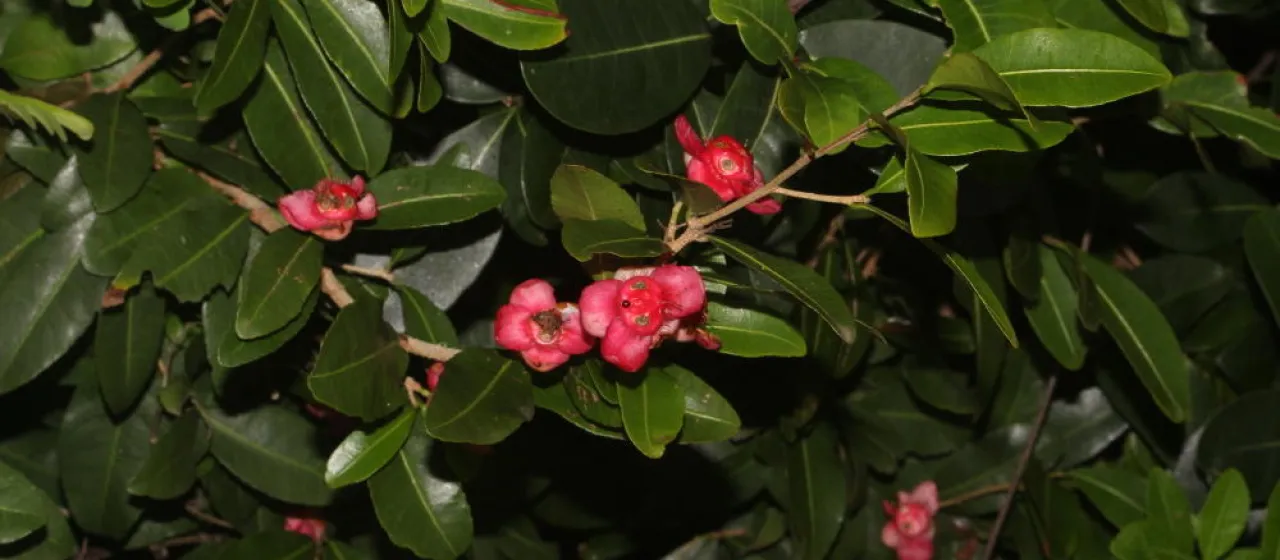
Botanically, the plant features robust, leathery foliage and a unique reproductive structure. Following the flowering period, the receptacle swells and turns deep red, providing a stark contrast to the black drupes, which is a hallmark of this species and a key feature for identification.
In terms of agricultural requirements, this shrub demands a warm climate and protection from frost. It prefers sunny locations with partial shade during the hottest parts of the day. The soil must be well-draining; heavy clay soils often lead to root rot, which is one of the most common issues in cultivation.
The primary use of Ochna barbosae is within ornamental horticulture. It is frequently employed in tropical landscaping as a specimen plant or as part of a mixed hedge. While not a commercial crop in the traditional sense, its maintenance requires standard pruning to ensure structural integrity and maximum aesthetic impact.
- Requires consistent watering, especially during the dry season.
- Susceptible to typical tropical pests like scale insects and aphids.
- Benefits from balanced fertilizer application during the active growing phase.
- Excellent adaptability to tropical coastal garden environments.