
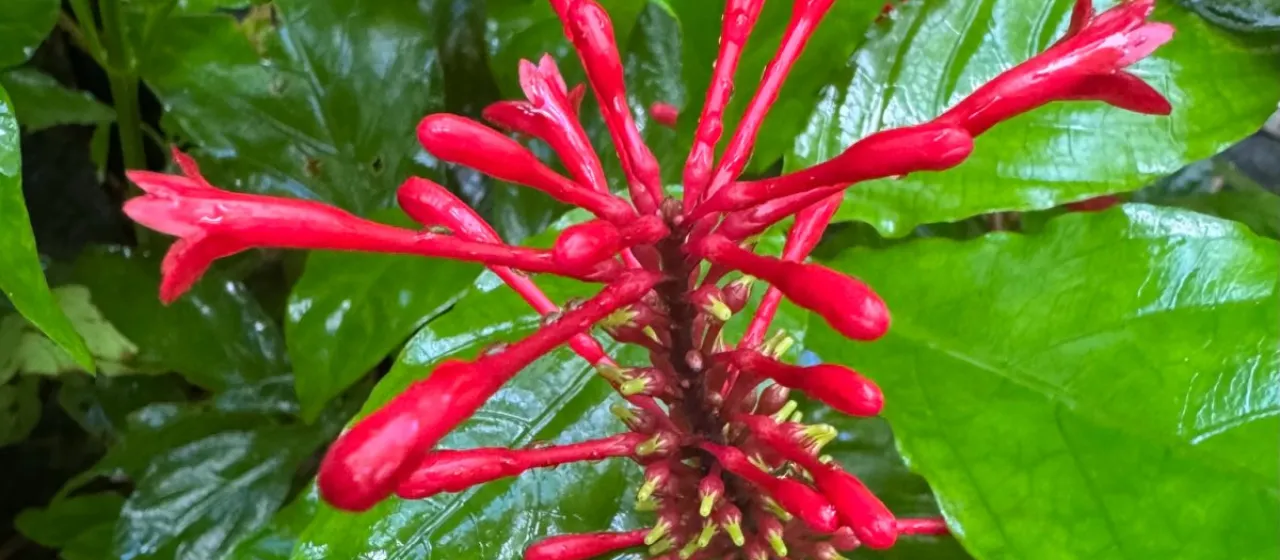
Description
Odontonema cuspidatum, commonly referred to as the fire spike, is a perennial evergreen shrub belonging to the Acanthaceae family. This species is widely recognized in agricultural and landscaping sectors for its rapid growth habit and vibrant, torch-like inflorescences that provide aesthetic value in warm-climate environments.
The plant originates from the tropical regions of Central America. Due to its specific environmental preferences, it is primarily cultivated in tropical and subtropical zones. It is strictly frost-sensitive, which restricts its outdoor commercial cultivation to regions that maintain stable, warm temperatures throughout the year.
Botanically, it is characterized by upright stems reaching heights of 1.5 to 2 meters. The leaves are opposite, elliptic to ovate, and deep green with a glossy finish. The plant produces spectacular terminal racemes of small, bright red, tubular flowers, which are highly attractive to local pollinators such as butterflies and hummingbirds.
Cultivation requires fertile, well-draining soil with a pH ranging from slightly acidic to neutral. Odontonema cuspidatum thrives in locations that offer bright, indirect sunlight, though it can tolerate partial shade. Proper irrigation management is vital; while the plant requires consistent moisture, avoiding waterlogged soil is critical to prevent root system compromise.
The primary utility of the plant is in ornamental horticulture, often used for border planting and decorative hedges. Pest management is a fundamental aspect of its maintenance. Common threats include spider mites and mealybugs, which are effectively controlled through integrated pest management (IPM) practices, including the use of horticultural oils and specific systemic insecticides when necessary.