
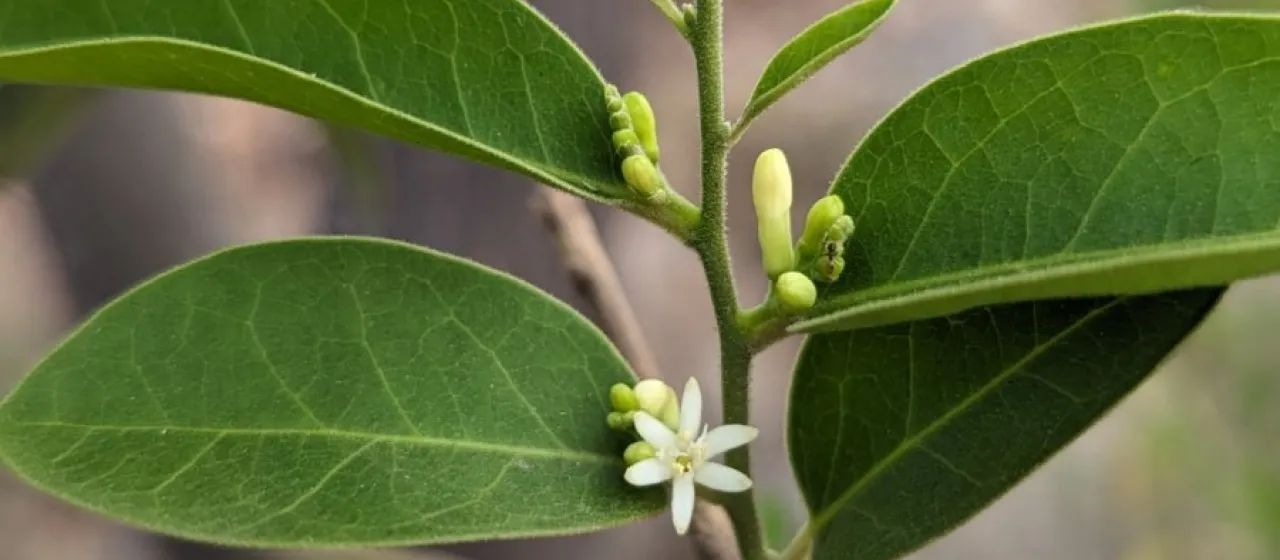
Description
Olax psittacorum is a distinct tropical shrub or small tree belonging to the Olacaceae family. It is widely recognized in botanical studies for its hemiparasitic nature, meaning it relies on the root systems of neighboring host plants to supplement its mineral and water uptake, although it remains capable of independent photosynthesis.
The native distribution of this species spans across tropical Australia and adjacent insular regions. It primarily thrives in environments ranging from open coastal woodlands to humid forest edges. The plant has adapted to these ecosystems by developing competitive strategies to establish itself in nutrient-poor or competitive soil environments.
Botanically, the species features leathery, elliptical leaves and small but distinct flowers, which develop into fleshy drupes. Its root system is its most vital feature, equipped with specialized structures that facilitate attachment to other plants. The plant's morphology allows it to minimize water loss, making it resilient in seasonally dry tropical regions.
Climate and soil requirements are relatively strict, necessitating warm, frost-free environments. The ideal soil profile should be sandy or loamy with excellent drainage to prevent root issues. Cultivation techniques often involve mimicking natural habitats by providing partial shade and avoiding excessive disturbance to the soil microbiome, which is essential for the plant's symbiotic connections.
Regarding its utility, the species is primarily valued in botanical research and as an exotic ornamental in tropical conservatories. It has historical significance in indigenous knowledge for medicinal properties. Common pests include aphids and scale insects, while fungal pathogens, particularly root rot, may occur if drainage is insufficient, especially in greenhouse conditions.