
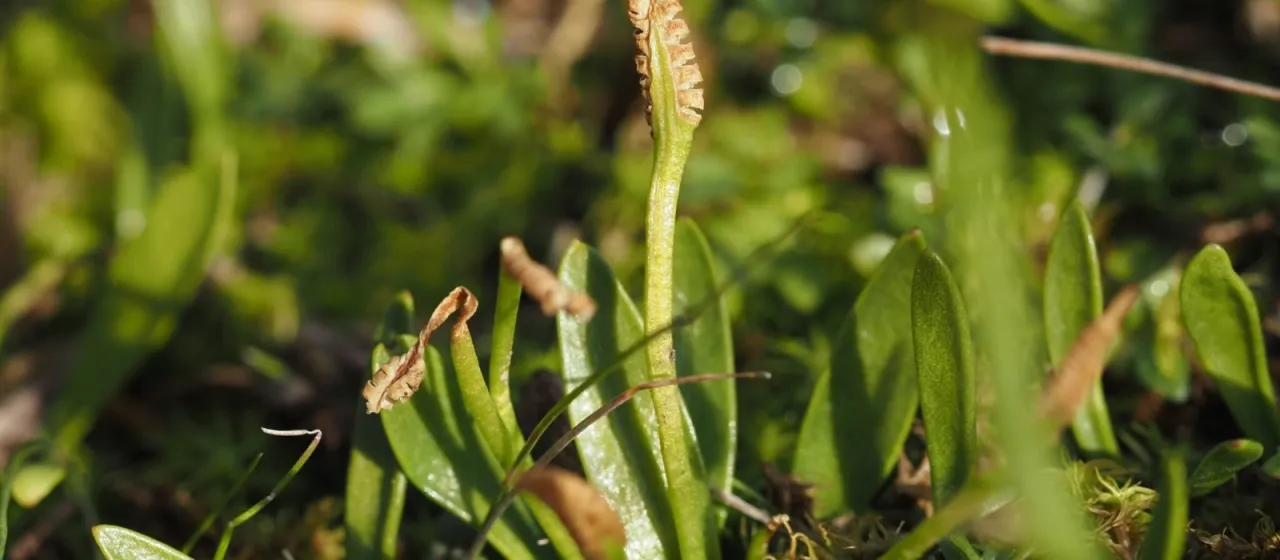
Description
The Portuguese adder's-tongue (Ophioglossum lusitanicum) is a small perennial fern species belonging to the Ophioglossaceae family. It is a highly specialized plant, distinct from typical woodland ferns, which has attracted the interest of botanists and conservationists due to its unique evolutionary history and morphological characteristics.
The native range of this species extends across the Mediterranean basin, the Atlantic coasts of Europe, and parts of Macaronesia and North Africa. It typically occupies open, sandy habitats that are seasonally wet, thriving in environments where moisture availability fluctuates throughout the year and vegetation competition remains relatively low.
Botany-wise, the plant is characterized by a short subterranean rhizome and a single leaf divided into a sterile blade and a fertile, spike-like structure that bears spores. Its growth cycle is highly adapted to mild winter climates, with active development occurring during cooler, wetter months and a dormant phase induced by the onset of summer drought.
Cultivation requirements involve maintaining specific environmental conditions, including well-drained, nutrient-poor sandy soils with a neutral pH. Proper moisture management is critical, as the plant requires sufficient water during its growth phase but is highly susceptible to root rot if the substrate remains saturated for too long in warmer temperatures.
- Requires high light exposure for optimal development.
- Thrives in coarse, sandy, and porous substrate textures.
- Needs protection from intense competition by faster-growing grasses.
The agricultural and economic utility of the Portuguese adder's-tongue is largely confined to botanical conservation and specialized horticultural collections. Potential threats include soil-borne pathogens and fungal infections during periods of poor ventilation, as well as the risk of losing the colony to aggressive invasive weed species that can outcompete the slow-growing fern.