Description
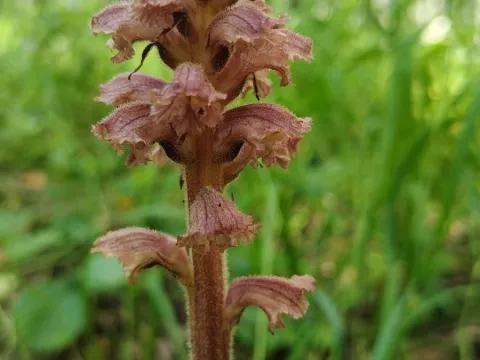
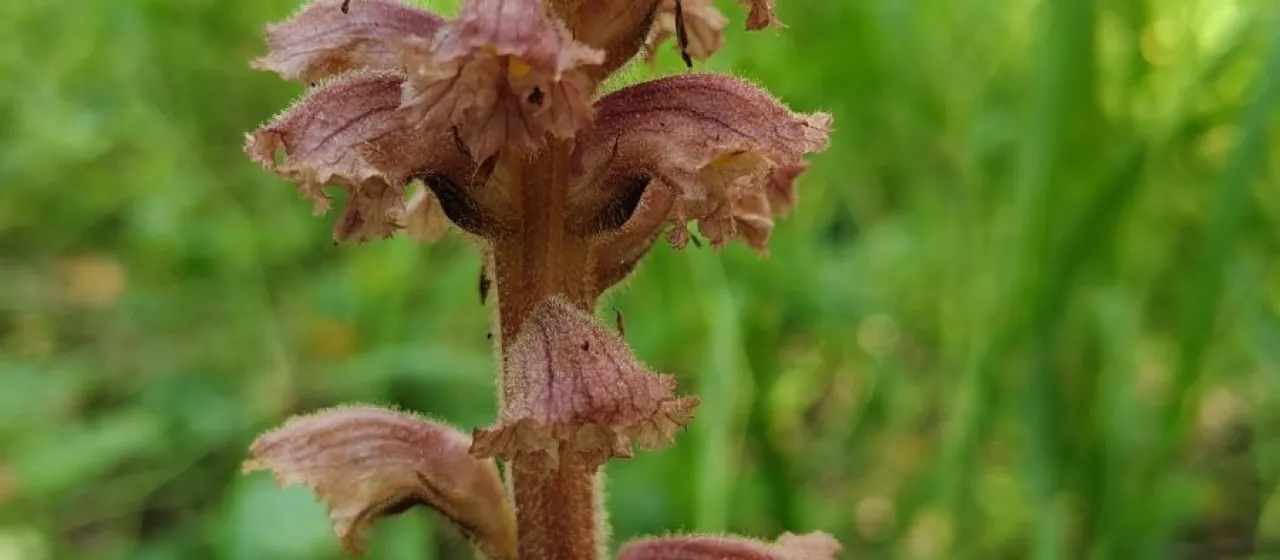
Alsatian broomrape (Orobanche alsatica) is a highly specialized parasitic plant species belonging to the Orobanchaceae family. As an obligate root parasite, it lacks chlorophyll and cannot perform photosynthesis. It survives by establishing a physical and nutritional connection to the root system of a host plant, using specialized structures known as haustoria to extract water and essential nutrients.
The native range of this species covers parts of Europe, the Caucasus, and Central Asia. It is primarily found in natural habitats associated with plants from the Asteraceae family, particularly the genus Artemisia. While often found in wild ecosystems, it can pose a significant challenge to agriculture when host-specific conditions align with commercial crop production cycles.
The botanical structure of the plant is distinctive, consisting of a fleshy, unbranched stem that emerges from the soil. The stem is covered in scale-like leaves and terminates in an inflorescence with tubular, brownish or yellowish flowers. The plant's lifecycle is tightly synchronized with its host, and the tiny, dust-like seeds are easily dispersed by wind, water, and agricultural machinery.
Environmental requirements for Alsatian broomrape include well-drained, fertile soils that facilitate the growth of its hosts. Agricultural management focuses on minimizing the soil seed bank. Key agronomic practices involve long-term crop rotation cycles, deep plowing to bury the seeds beyond their germination depth, and the implementation of clean farming practices to prevent the introduction of seeds into new fields.
Economically, this species is considered a nuisance due to the damage it causes to potential host crops. Effective integrated pest management (IPM) is essential to reduce its impact. Key strategies for controlling the infestation include:
- Selecting non-host crops for rotation to starve the parasite.
- Using herbicide-resistant crop varieties where applicable.
- Implementing mechanical removal of stalks before seed set.
- Maintaining high soil fertility to improve crop tolerance to parasitic stress.
Photo gallery