Description
Indian ricegrass (lat. Oryzopsis hymenoides) is a perennial cool-season bunchgrass belonging to the Poaceae family. It is widely recognized for its exceptional resilience and its role in arid ecosystems, serving as both a source of high-quality forage and a tool for soil erosion control.
The species is native to western North America, ranging from southern Canada through the arid regions of the United States down to northern Mexico. It thrives in open, dry habitats such as deserts, sandy steppes, and rocky slopes where annual precipitation is relatively low and evaporative demand is high.
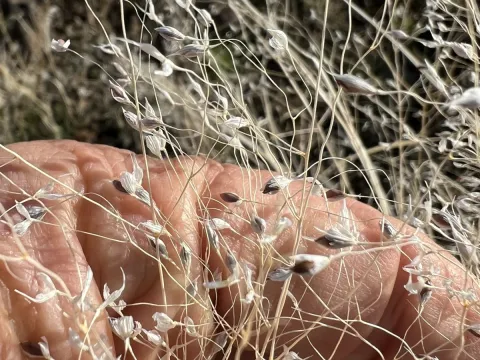
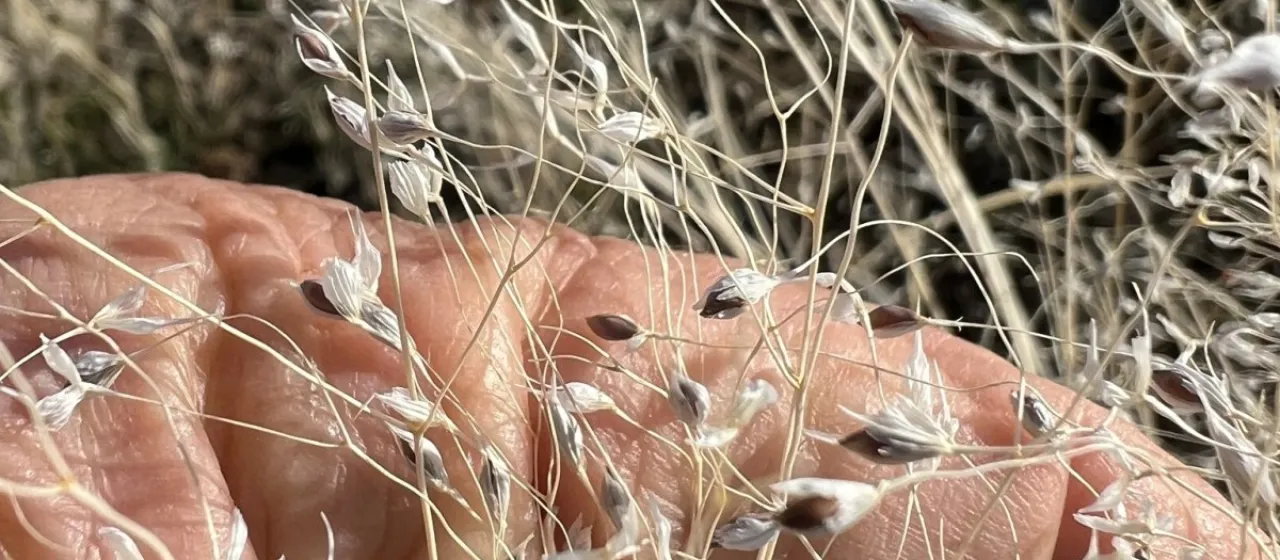
Botanically, it is characterized by fine, thin leaf blades and an open, diffuse panicle that bears seeds. The plant has a robust, deep-penetrating root system, which is its primary adaptation strategy. This allows the grass to remain dormant during peak summer heat and quickly resume growth during favorable conditions.
For successful cultivation, Indian ricegrass requires well-drained soil, specifically sandy or gravelly textures. It cannot tolerate heavy, waterlogged clay soils, as these lead to root asphyxiation and disease. Adequate spacing and minimal competition from weeds are essential during the establishment phase, as the seedling stage is relatively slow.
The agricultural and environmental importance of this crop is significant, particularly in semi-arid land management. The main benefits include:
- Superior drought tolerance, outperforming many other cool-season grasses;
- Significant value in stabilizing shifting sands and preventing wind erosion;
- High palatability for livestock and wildlife, particularly during winter;
- Nutritional density of seeds, which are rich in protein.
Typical issues involving the cultivation of Oryzopsis hymenoides often revolve around moisture management. Root rot can occur if fields are irrigated too frequently. Furthermore, producers should monitor for common prairie pests such as grasshoppers and aphids, although the crop generally demonstrates a high level of natural robustness against typical agricultural threats when grown in appropriate environments.
Photo gallery