Description
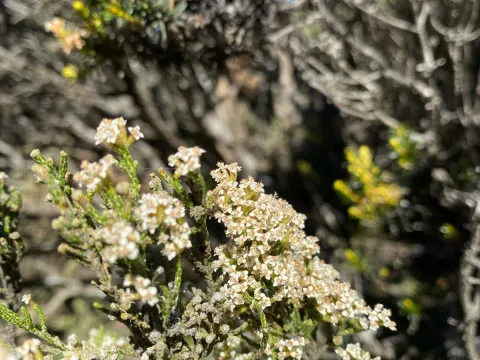
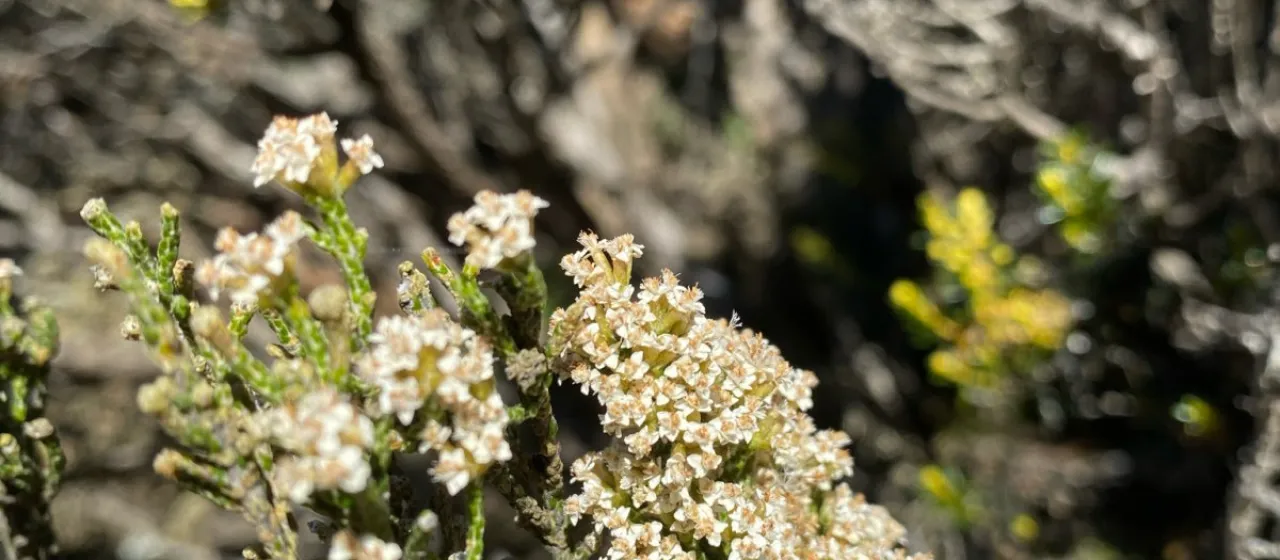
Ozothamnus hookeri, commonly known as the Kerosene Bush, is an evergreen shrub belonging to the Asteraceae family. This distinctive plant is recognized for its unique foliage, which consists of small, scale-like leaves closely pressed to the stems, giving it a conifer-like appearance. It is a highly valued ornamental plant for those seeking structure and texture in a garden setting.
The plant originates from Tasmania and southeastern Australia, where it thrives in alpine and sub-alpine regions. Due to its natural habitat, it is well-adapted to cool climates and rocky, well-drained soils. In cultivation, it serves as a fascinating example of high-altitude flora that brings a unique aesthetic to gardens, provided that its specific environmental needs are met.
Botanically, Ozothamnus hookeri forms dense, rounded shrubs. During the summer, it produces small, tight clusters of cream-colored flower heads at the tips of its branches. The buds are often tinted with red or brown, creating a beautiful color contrast before they bloom. Its growth habit is naturally compact, making it an excellent choice for rock gardens or smaller garden spaces.
Regarding agrotechnology, success with this species depends on providing excellent drainage and exposure to full sun. The plant struggles in heavy, waterlogged soils, which can lead to rapid root decay. It prefers acidic soil conditions. While it is hardy in its native range, gardeners in colder climates should provide winter protection or cultivate it in containers that can be moved to a sheltered area.
In terms of хозяйственное (economic) and aesthetic use, the plant is a staple in the florist industry. Its dense, textural branches are highly prized for professional floral arrangements and bouquets, as they hold their structure exceptionally well after harvesting. In landscape design, it is frequently used to add a touch of wild, natural charm to rockeries and Mediterranean-style garden beds.
- Thrives in full sun to partial shade.
- Requires well-drained, acidic soil.
- Excellent for cut flower arrangements.
- Slow-growing, requiring minimal pruning.
- Sensitive to excessive soil moisture.
Pests and diseases are generally manageable if proper cultural practices are followed. The main threats include fungal root rot triggered by waterlogged conditions and potential infestations of aphids or spider mites, particularly in greenhouse or indoor environments. Providing good air circulation and avoiding overhead watering are key to keeping the plant healthy and robust.
Photo gallery