Description
Ozothamnus rosmarinifolius, commonly known as the rosemary-leafed everlasting, is an attractive evergreen shrub belonging to the Asteraceae family. This species is highly valued in both commercial floriculture and domestic landscaping for its unique foliage and clusters of small, bud-like flowers that appear in late spring and summer.
The plant originates from south-eastern Australia, particularly Tasmania, where it inhabits coastal cliffs and mountain slopes. Its natural environment indicates a preference for temperate, airy conditions, which is a critical factor for successful cultivation in garden settings across the globe.
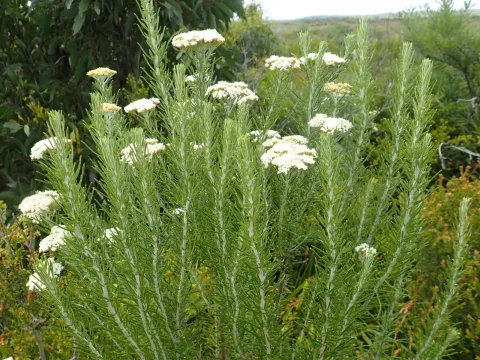
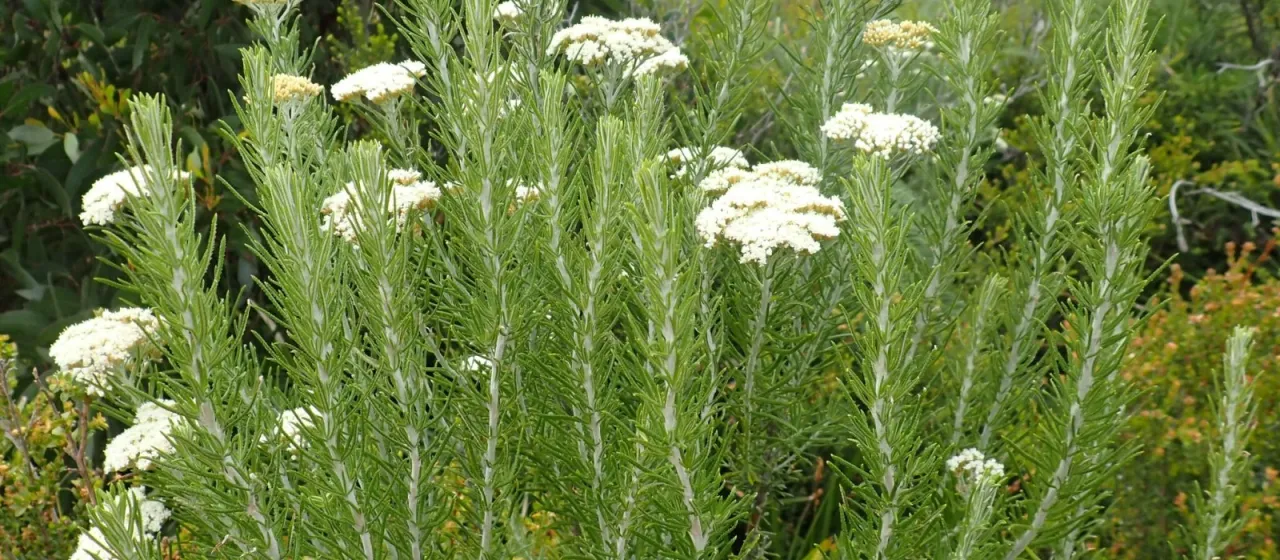
Botanically, this shrub grows to a height of 1–2 meters, featuring slender, rosemary-like leaves that are dark green above and silvery-white beneath due to a dense layer of trichomes. The flowers are typically white or pinkish, gathered in clusters that remain attractive for a long period, even when dried.
When it comes to agronomy, the plant demands well-draining soil and a sunny or light-shade position. It is relatively drought-tolerant once established, but it cannot withstand "wet feet." In areas with severe frosts, the plant requires protection or must be grown in containers that can be sheltered indoors during winter months.
In terms of usage, it is a significant crop for the floral industry, as the stems are harvested for bouquets and dried arrangements due to their durability and aesthetic appeal. Growers should watch for fungal issues like root rot in heavy, waterlogged soils and monitor for common pests such as aphids during the active growth phase.
Photo gallery