Description
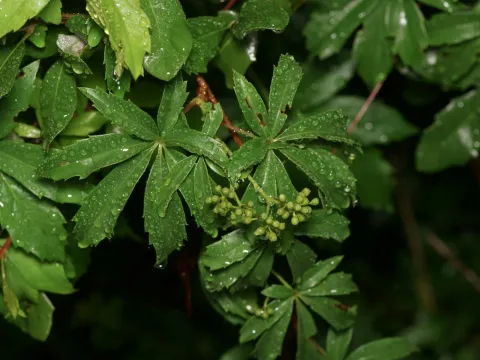
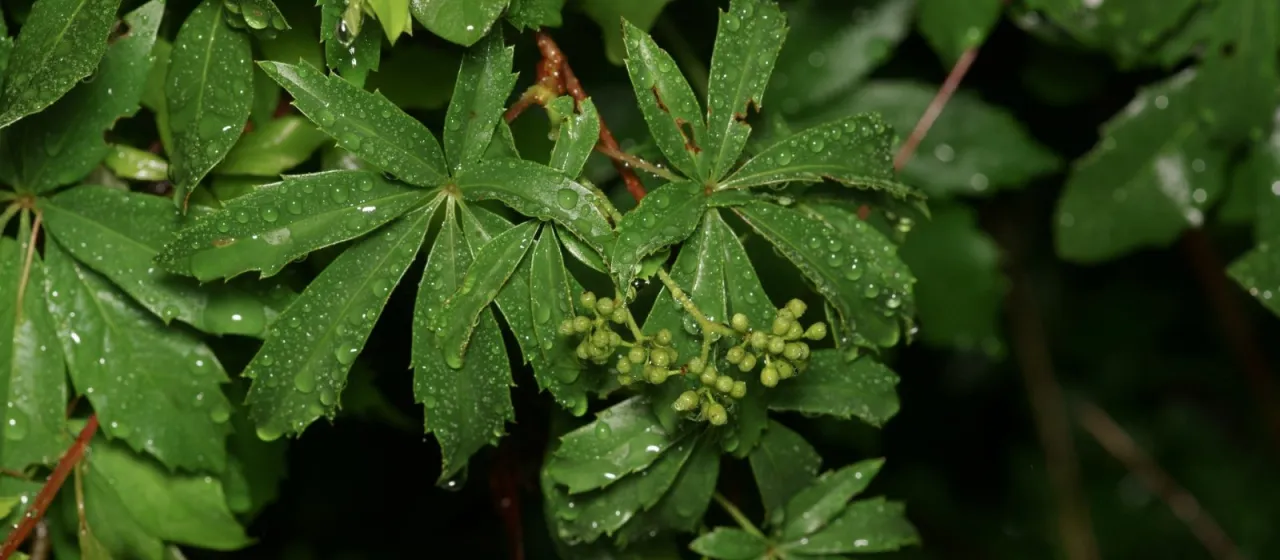
The seven-leaf creeper (Parthenocissus heptaphylla) is a robust woody vine belonging to the Vitaceae family. It is distinct from other species of the genus due to its palmately compound leaves, which characteristically consist of seven leaflets, providing a unique texture to its dense foliage.
Originating from Mexico, this species has adapted to diverse climatic conditions. In its native habitat, it grows along rocky slopes and forest margins, utilizing its adhesive tendrils to climb significant heights. This evolutionary trait makes it an exceptionally efficient climber in both wild and cultivated settings.
The botanical structure of the plant is characterized by vigorous growth and high environmental resilience. The leaves undergo a dramatic color change in the autumn, transitioning from deep green to vibrant shades of crimson and purple, which is highly valued for ornamental purposes in public and private landscapes.
Regarding agrotechnical requirements, the plant is relatively undemanding. It thrives in various soil types, provided there is adequate drainage. It performs best in positions with full sun to partial shade. The species shows notable drought tolerance once established, making it suitable for low-maintenance landscaping.
When it comes to pests and diseases, the seven-leaf creeper is generally robust and rarely faces serious health issues. In poorly ventilated areas, it may occasionally suffer from minor fungal infections, which are easily managed through proper pruning practices. Regular maintenance is key to keeping the growth under control.
- Vertical landscaping of buildings and masonry walls.
- Creation of natural sound barriers and privacy screens.
- Erosion control on embankments and steep slopes.
Photo gallery