Description
Thicket creeper, or Parthenocissus inserta, is a vigorous perennial woody vine belonging to the Vitaceae family. It is a close relative of the Virginia creeper but is distinguished primarily by its lack of adhesive discs on its tendrils, which means it relies solely on twining and tendril anchoring to climb surfaces, making it a reliable choice for trellis-based vertical gardening.
Native to North America, the species thrives in temperate zones and has naturalized in various regions due to its robust nature. It is widely cultivated across continents as an ornamental plant for its rapid growth rate and spectacular autumnal foliage transformation, which provides significant aesthetic value to architectural and landscape projects.
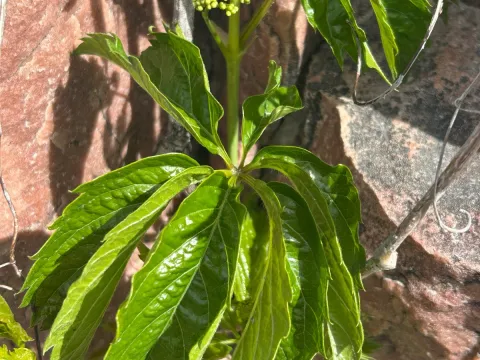
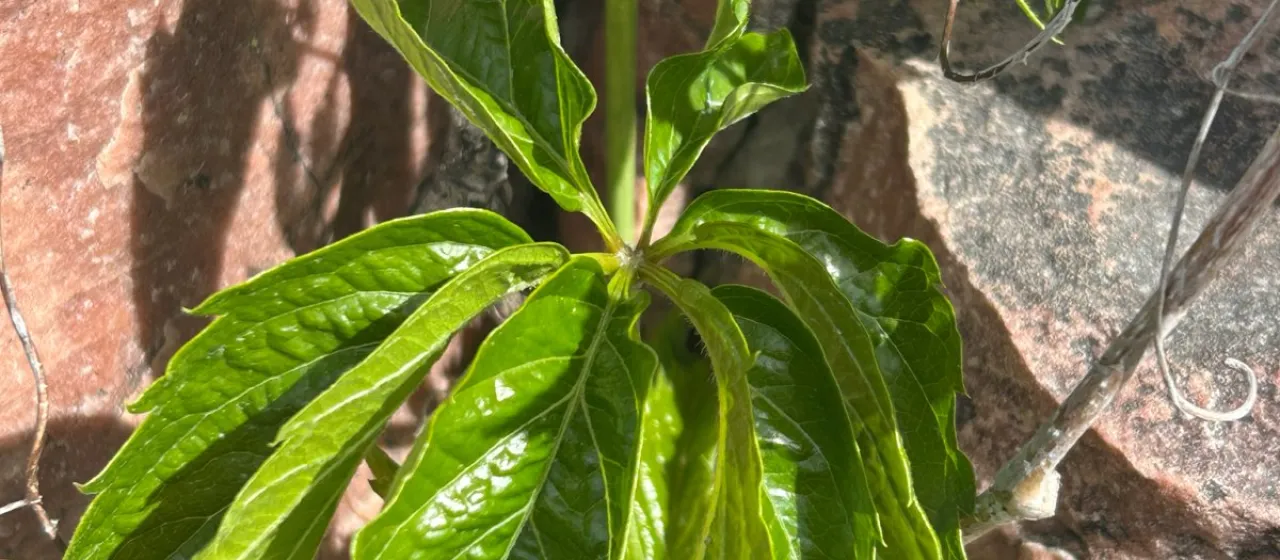
Botanically, the plant features alternate, palmately compound leaves with five leaflets that transition from glossy green in summer to brilliant shades of red and orange in autumn. The inflorescences are modest, producing small greenish-white flowers followed by dark blue-black berries. These fruits serve as a food source for local bird populations during the winter season.
Cultural requirements are modest: the plant prefers full sun to partial shade and adapts to a wide range of soil types, provided they are not excessively waterlogged. Agronomic management includes initial site preparation to ensure drainage, regular pruning to contain its aggressive spread, and occasional irrigation during establishment years to promote deep root systems.
The practical applications for this vine are focused on horticultural and ecological benefits:
- Rapid covering of fences, pergolas, and vertical structures.
- Erosion control on steep banks and slopes.
- Providing thermal insulation for exterior walls.
- Creating natural privacy screens in urban environments.
In terms of plant health, Parthenocissus inserta is remarkably resilient. However, it can be susceptible to powdery mildew in high-humidity or poorly ventilated conditions. Pests such as aphids or leaf-eating beetles may occasionally inhabit the foliage, but these rarely cause long-term damage if the plant is well-maintained and thriving in an appropriate environment.
Photo gallery