Description
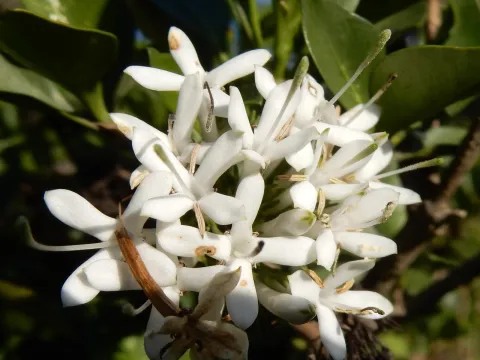
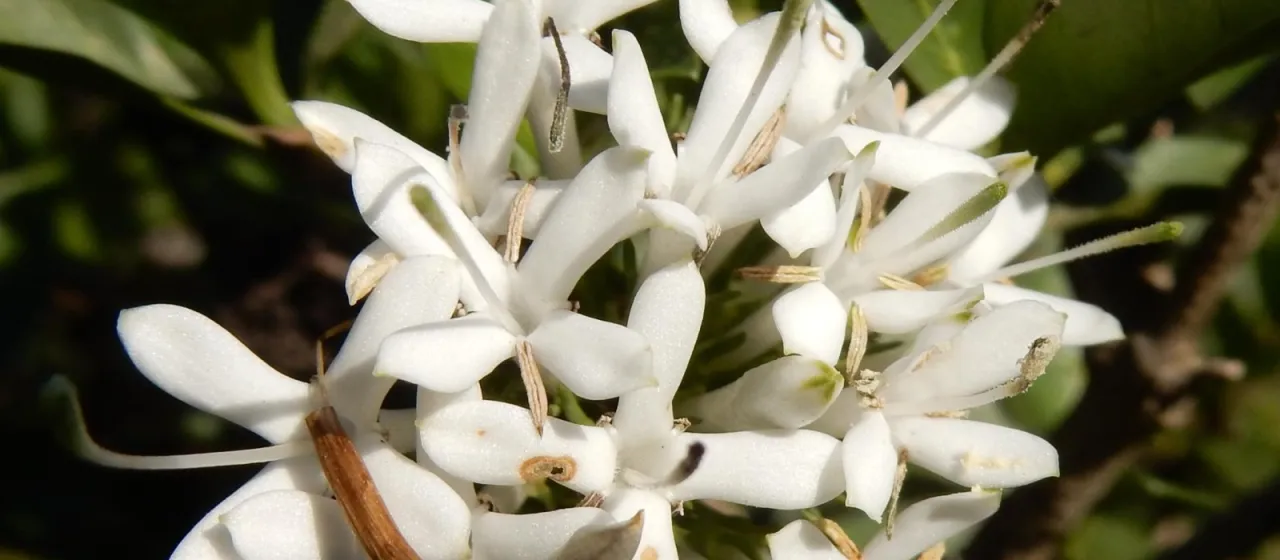
Cape wedding bush (Pavetta capensis) is an evergreen shrub or small tree belonging to the Rubiaceae family. This plant is renowned for its attractive foliage and distinct white, fragrant flowers that appear in large, dense clusters. It is a popular ornamental choice, particularly appreciated for its aesthetic value in garden design and conservatory collections.
The native range of this species extends across the eastern and southern parts of Africa, where it thrives in forest margins and rocky habitats. Because of its tropical origins, the plant has evolved to adapt to environments with consistent moisture and protection from harsh direct winds. It has since become a sought-after plant for enthusiasts of exotic flora globally.
Botanically, it features dark green, leathery, opposite leaves that contain specialized bacterial nodes—a unique feature that assists the plant with nutrient absorption. The flowers are tubular with long styles and prominent stamens, giving them a star-like appearance. After successful pollination, the shrub produces small, fleshy berries that turn dark purple or black upon maturity.
For optimal growth, the Cape wedding bush requires a well-draining, nutrient-rich soil with a slightly acidic pH. As a tropical species, it demands high humidity and protection from cold temperatures. Regular watering is essential during the active growing season, combined with balanced fertilizers to ensure the plant maintains its vigor and produces abundant flower clusters.
- Light: Needs bright, indirect light to thrive.
- Temperature: Prefers warm climates without frost.
- Watering: Keep soil consistently moist but never waterlogged.
- Propagation: Often grown from semi-hardwood cuttings.
The agricultural and ornamental utility of Pavetta capensis is primarily focused on landscape design and horticulture. It serves as a beautiful accent shrub for tropical or subtropical gardens, often utilized as a focal point due to its long flowering season and fragrant blooms. Its potential in selective breeding continues to attract interest among botanists and plant nursery growers.
Common pests include spider mites, mealybugs, and scale insects, which can flourish if humidity levels are not properly managed or if the plant is stressed. Root rot is a significant risk if drainage is inadequate. By maintaining clean growing conditions and ensuring adequate ventilation, growers can successfully mitigate these issues and promote the plant's long-term health.
Photo gallery