Thick-leaved petrocoptis
Petrocoptis crassifolia
Description
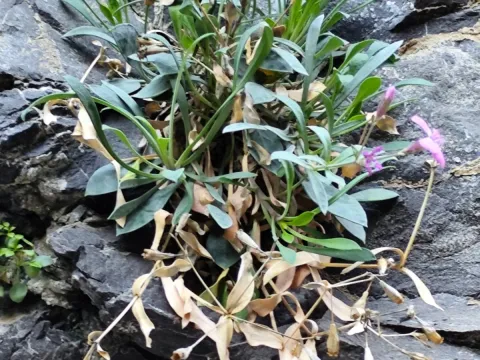
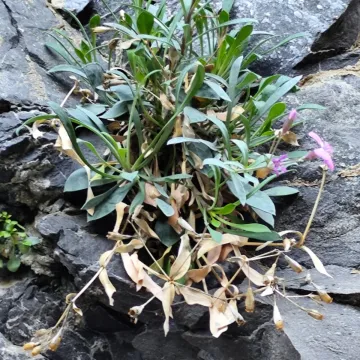
Thick-leaved petrocoptis (Petrocoptis crassifolia) is an ornamental perennial herb belonging to the Caryophyllaceae family. This species is highly valued in horticulture for its compact, cushion-forming growth habit, making it an ideal choice for rock gardens, crevice plantings, and stone walls where many other plants struggle to thrive.
The origin of this species is traced to the mountainous regions of the Iberian Peninsula, specifically in Spain. It is native to limestone cliff faces, where it grows in the crevices of exposed rock. Due to this natural distribution, it has adapted to environments with limited soil volume, high sun exposure, and excellent drainage, which must be replicated in cultivation.
Botanically, Petrocoptis crassifolia is characterized by its fleshy, glaucous-green leaves that form dense, low-growing rosettes. The succulent nature of the foliage allows the plant to tolerate temporary dry spells. The inflorescences emerge on short, upright stems, bearing delicate flowers, typically in shades of white or pink, which create a soft appearance against harsh rocky landscapes.
In terms of agrotechnical requirements, the species demands a gritty, well-draining substrate. It performs best in a neutral to slightly alkaline soil profile. When planted in garden beds, it is crucial to avoid heavy, clay-based soils that hold moisture for too long, as this typically leads to root rot. A sunny position with good air circulation is essential for maintaining plant health and vigor.
- Full sun exposure for optimal flowering.
- Excellent drainage is the top priority.
- Avoid over-watering, especially during winter months.
- Top dressing with gravel to protect the root neck.
The primary use for this plant is as a specialized ornamental for rockeries. Regarding plant health, the most common threats include snails and slugs, which may feed on young shoots. Additionally, soil-borne fungal pathogens can become an issue if the root zone remains waterlogged. Regular monitoring and maintaining a dry, airy environment around the foliage effectively prevents these issues.
Photo gallery