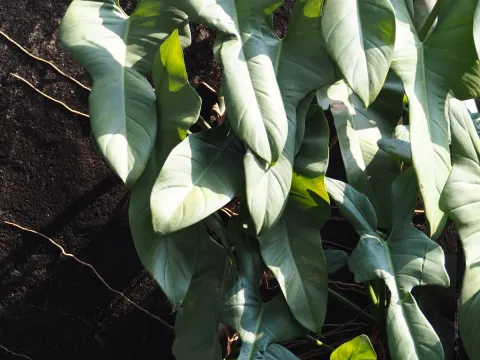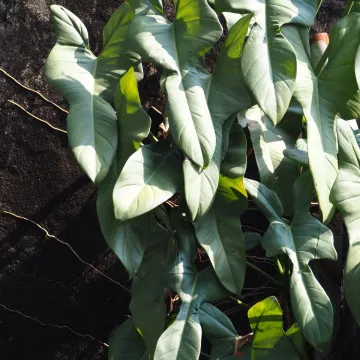

Philodendron bipennifolium
Philodendron bipennifolium
Description
Philodendron bipennifolium is a prominent tropical liana belonging to the Araceae family. This species is native to the rainforests of South America, specifically in regions of Brazil. As a botanical specimen, it is recognized for its unique foliage and climbing habit, making it a highly desirable plant for indoor horticulture and conservatory display.
In its natural habitat, the plant grows as an epiphyte or hemiepiphyte, scaling trees to reach the canopy light. While its primary distribution is within tropical latitudes, its cultivation as an ornamental crop has spread globally. In agriculture and commercial nursery production, it is propagated primarily through stem cuttings or tissue culture to ensure consistency in leaf morphology.
Botanically, the plant is characterized by its distinctively shaped leaves that appear violin-shaped or lobed when mature. The stems are robust and produce long, strong aerial roots that anchor the plant to surfaces. The growth rate is relatively rapid under optimal conditions, necessitating space and structural support for the plant to thrive as it matures.
Cultural requirements for Philodendron bipennifolium involve replicating a humid, subtropical environment. Key success factors include:
- Bright, indirect light to prevent leaf scorching.
- Well-draining, peat-based potting media.
- Regular irrigation allowing the top inch of soil to dry out between waterings.
- Consistent ambient temperatures between 20°C and 25°C.
The economic and practical use of this plant is centered on the ornamental plant industry, where it serves as a staple for interior landscaping. It is valued not only for its aesthetics but also for its air-purifying properties. Common pests that impact this crop include spider mites and scale insects, which must be monitored through regular inspections of the underside of the leaves and stem nodes.
Photo gallery