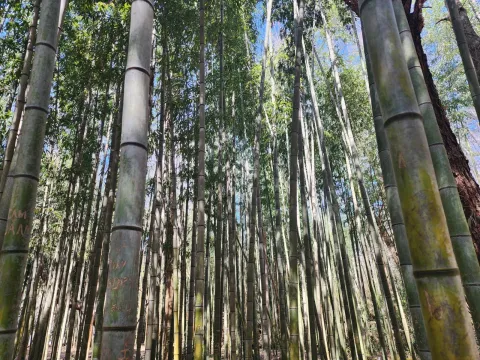

Giant timber bamboo
Phyllostachys reticulata
Description
Giant timber bamboo (Phyllostachys reticulata) is a perennial, evergreen species belonging to the grass family (Poaceae) and the bamboo subfamily. It is recognized as one of the most vigorous and tall-growing bamboo species, valued for its exceptionally hard and durable culms that make it a significant agricultural commodity in many parts of the world.
Originating from East Asia, specifically China and Japan, this species has been introduced and cultivated globally in regions with temperate and subtropical climates. It thrives best in environments where warm, humid summers are followed by mild winters, allowing for significant annual growth in culm height and density.
Botanically, Phyllostachys reticulata features woody, hollow culms and a complex rhizome system that spreads horizontally underground. The leaves are typically narrow, lance-shaped, and deep green, contributing to its dense foliage. The plant’s rapid growth rate allows it to regenerate quickly after harvesting, making it a sustainable resource for various industries.
Successful cultivation requires deep, well-drained, and nutrient-rich soils with a slightly acidic to neutral pH level. It demands ample sunlight and protection from heavy winds, which can damage the tall, slender culms. Agrotechnical management involves regular fertilization during the growth season, consistent moisture maintenance, and the strategic use of rhizome barriers to prevent unwanted spread.
The economic value of this bamboo is extensive. Its culms are widely used in construction, furniture manufacturing, and flooring, as well as for crafting high-quality kitchenware and musical instruments. Additionally, the young shoots of the plant are harvested in early spring to serve as a nutritious food source, commonly utilized in international cuisine for their crunchy texture.
As an agricultural crop, it is subject to specific biotic pressures. Typical pests include spider mites, aphids, and bamboo scale insects, which can impede growth. Diseases like leaf rust or fungal spots may occur, particularly in poorly ventilated or waterlogged conditions. Maintaining clean plantation management, including the removal of dead or crowded culms, is essential for maximizing yields.
Photo gallery