Pili nut
Canarium ovatum Engl.
Description
The Pili nut (Canarium ovatum Engl.) is a prominent tropical tree species belonging to the Burseraceae family. Native to the Philippines, it is economically significant primarily for its kernel, which is highly prized for its buttery texture and high fat content. The tree is known for its resilience and long production cycle in native tropical environments.
The natural range of the species is limited to the maritime regions of Southeast Asia, specifically the Philippines. It thrives in tropical rainforest conditions characterized by high humidity and consistent rainfall throughout the year. While wild trees are common, cultivated orchards have become an important source of income for local farming communities.
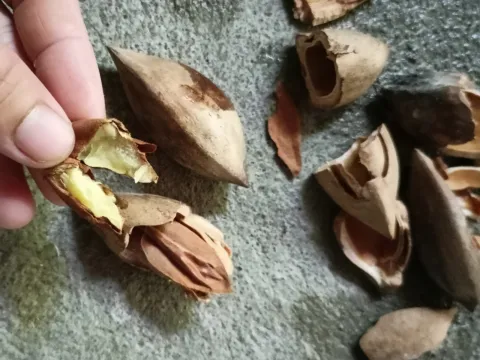
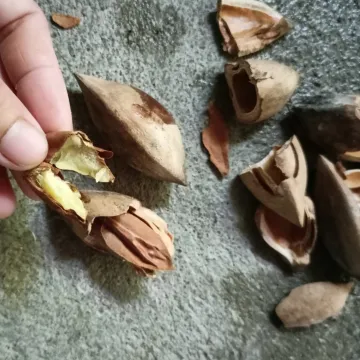
Botanically, Canarium ovatum is a large evergreen tree with a dense canopy and complex compound leaves. It is a dioecious plant, requiring both male and female trees for successful pollination and fruit set. The fruit is a drupe, containing a hard, woody shell that protects the nutrient-dense kernel inside.
Agronomically, the tree requires deep, fertile, and well-drained soils to thrive. It is sensitive to waterlogging and prefers tropical lowland climates with minimal temperature fluctuations. Proper farm management involves regular pruning to maintain canopy health and ensure that the tree can withstand the strong winds often associated with tropical typhoons.
The commercial use of the Pili nut is diverse. The kernels are widely consumed as snacks—either roasted, salted, or used in confectionery. Beyond the edible parts, the oil extracted from the pulp and kernels is used in high-end cosmetic products, while the tree's resin is harvested for various medicinal and industrial purposes.
- Susceptibility to anthracnose under high humidity.
- Infestation by fruit-boring insects during the harvest season.
- Requirement for significant space between trees in plantations.
- Nutritional richness of the kernel (high lipid and protein content).
Photo gallery