Pink riceflower
Pimelea rosea
Description
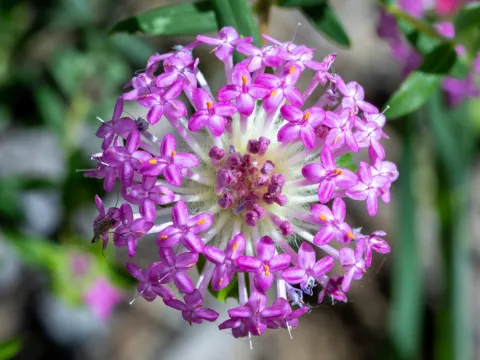
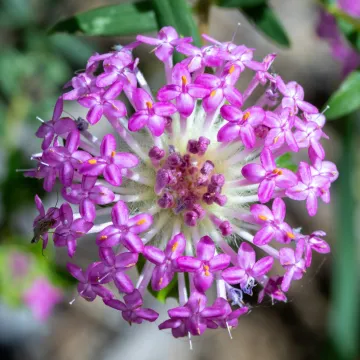
Pink riceflower (Pimelea rosea) is an evergreen shrub belonging to the Thymelaeaceae family. It is highly valued in horticulture for its spectacular, dome-shaped clusters of bright pink flowers that appear in abundance during the flowering season. While not a conventional agricultural crop, it is a significant ornamental plant grown extensively in nurseries and specialized gardens.
The plant is endemic to the southwestern regions of Western Australia. It thrives in its natural habitat of sandy, well-draining soils under a Mediterranean climate, characterized by warm, dry summers and mild, wet winters. Due to its specific environmental needs, it is often cultivated as a greenhouse specimen or an indoor/outdoor container plant in cooler climates where frost is a risk.
Botanically, Pimelea rosea features narrow, linear, green leaves that are arranged oppositely along the stems. The flowers consist of numerous small florets arranged in dense heads. The plant typically reaches a moderate size, forming a dense and rounded habit if managed correctly through proper pruning. Its root system is sensitive and delicate, requiring minimal root disturbance during transplanting.
Successful cultivation depends primarily on soil composition and drainage. It requires a fast-draining, slightly acidic substrate. Overwatering is the most common cause of failure; therefore, the soil must be allowed to dry out slightly between watering sessions. It prefers bright, filtered light and good air circulation to mimic its natural environment in the wild.
The maintenance routine for this shrub includes:
- Pruning after flowering to encourage dense branching.
- Using low-phosphorus fertilizers to prevent toxicity.
- Monitoring for common pests like spider mites and scale insects.
- Ensuring excellent air flow to prevent fungal infections.
Photo gallery