Piptanthus forrestii
Piptanthus forrestii
Description
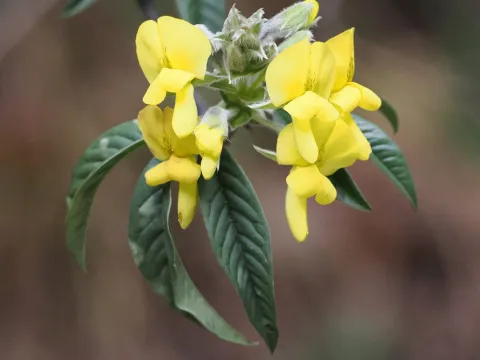
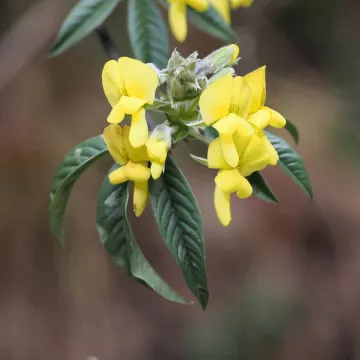
Piptanthus forrestii is an evergreen or semi-evergreen shrub belonging to the Fabaceae (legume) family. Often referred to as Forrest's laburnum, it is highly valued in horticulture for its spectacular display of yellow, pea-like flowers and its rich, deep green trifoliate foliage. Like many members of its family, it plays a beneficial role in nitrogen fixation within the soil.
The species originates from the mountainous regions of Yunnan, China. It thrives in temperate, moist environments and is adapted to high-altitude landscapes. In cultivation, it performs best in regions where mild winters and cool summers prevail, as it can struggle in extreme heat or prolonged sub-zero temperatures.
Botanically, the plant develops into a robust bush reaching heights of up to 3 meters. The leaves are distinctive, consisting of three leaflets that are slightly hairy underneath. The flowers appear in late spring in erect, dense racemes that provide a vivid splash of color against the darker foliage, making it a focal point in any garden setting.
Cultivation requirements involve well-drained, fertile soil with a neutral to slightly acidic pH. The plant demands excellent drainage, as waterlogged conditions are the primary cause of root failure. It should be planted in a sunny position that offers protection from harsh, drying winds, ensuring the plant remains healthy and vigorous throughout its growing season.
- Light pruning immediately after flowering to maintain shape.
- Mulching to retain soil moisture and suppress weed growth.
- Monitoring for aphids and spider mites during dry spells.
- Providing winter protection in colder climates to prevent dieback.
The primary use of Piptanthus forrestii is ornamental, often utilized in shrub borders or as a feature plant in modern landscaping. Regarding phytosanitary issues, growers should watch for common legume pests and fungal pathogens, ensuring proper air circulation around the canopy to minimize the risk of leaf spots and foliage decay.
Photo gallery