Weeping Pittosporum
Pittosporum phillyreoides
Description
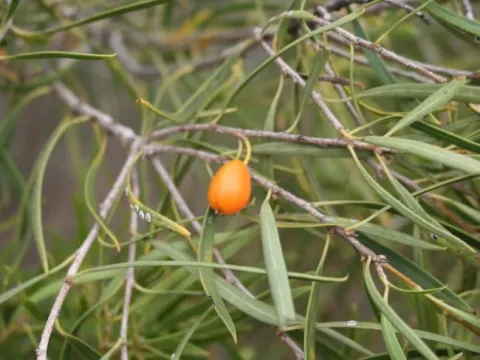
The Weeping Pittosporum (Pittosporum phillyreoides) is an evergreen tree or large shrub belonging to the Pittosporaceae family. Widely recognized for its graceful, pendulous branches, it is a highly resilient species that thrives in challenging environments. It is often referred to as "desert apricot" due to its fruit appearance.
Native to Australia, this plant is well-adapted to arid and semi-arid landscapes. It is a common feature in the outback and dry woodland areas, demonstrating a remarkable ability to survive in nutrient-poor soils. Its natural distribution spans vast regions of the continent, proving its robustness as a landscape plant in warmer climate zones.
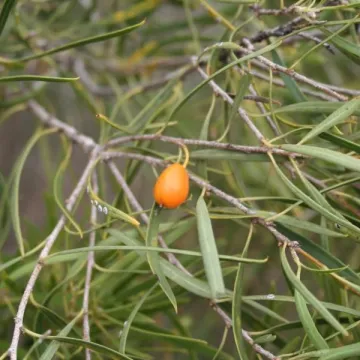
Botanically, the species is characterized by narrow, leathery leaves and fragrant, creamy-yellow bell-shaped flowers. The fruit is a hard, orange capsule that eventually splits to reveal seeds embedded in a sticky, resinous substance. This unique reproductive strategy allows the seeds to adhere to surfaces, facilitating natural dispersion in the wild.
In terms of cultivation, the Weeping Pittosporum requires full sun and exceptionally well-drained soil. It is highly drought-tolerant once established but requires careful watering during its first year of growth. The species is sensitive to waterlogged conditions, making it unsuitable for areas prone to heavy flooding or poorly drained, heavy clay soils.
- Excellent tolerance to extended drought periods.
- Low maintenance requirements once fully grown.
- Attractive cascading growth habit.
- Suitable for xeriscaping and sustainable gardens.
- Fragrant blooms attracting local pollinators.
The primary use of the plant is in ornamental landscaping, where it serves as a specimen tree or a screening hedge in dry gardens. While generally healthy, it can occasionally be affected by scale insects or aphids, particularly in humid or stagnant conditions. Regular pruning is recommended to maintain its elegant form and ensure proper air circulation throughout the canopy.
Photo gallery