Gold-backed fern
Pityrogramma chrysophylla
Description
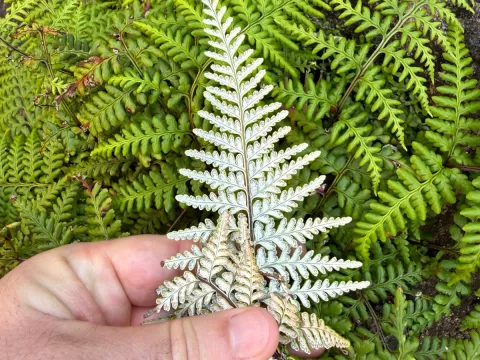
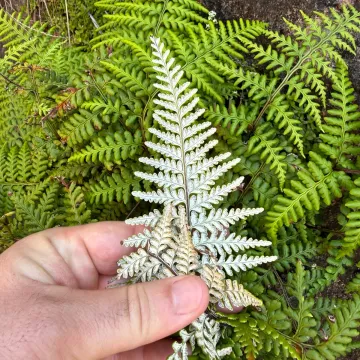
The gold-backed fern (Pityrogramma chrysophylla) is a striking ornamental fern species classified within the Pteridaceae family. It is widely recognized in horticultural circles for its unique, powdery, gold-colored underside of the fronds, which distinguishes it from other common fern varieties.
This species is native to tropical regions of the Americas, specifically the Caribbean and parts of South America. In its natural habitat, it thrives in rocky crevices and humid forest environments, demonstrating a resilience to growing on specialized, well-drained substrates rather than deep garden soil.
Botanically, the plant features graceful, arching fronds that typically grow between 30 and 60 centimeters in height. The underside of the foliage is coated with a distinctive yellow or golden waxy powder, which acts as a protective barrier, reducing transpiration in its native, warm environment.
Regarding agrotechnical requirements, the plant demands consistent humidity and stable temperatures ranging from 18°C to 24°C. Successful cultivation depends on using a porous, nutrient-rich, and slightly acidic potting mix, coupled with careful watering strategies to prevent waterlogging, which often leads to root degradation.
The primary use of this culture is within the floriculture and greenhouse sectors as a specimen ornamental plant. Typical pests include spider mites and scale insects, which are particularly prevalent in low-humidity conditions. Maintaining optimal air circulation is critical to prevent the development of fungal leaf pathogens.
Photo gallery