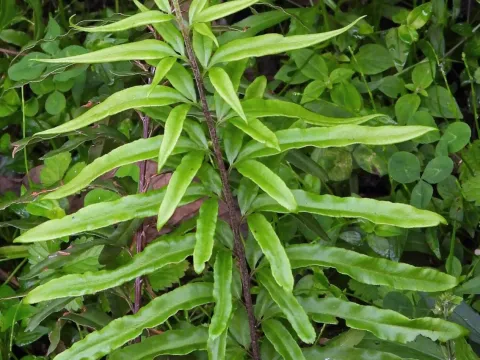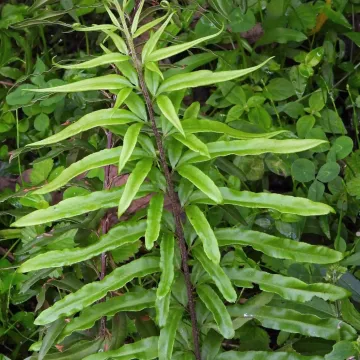
Three-leaf gold fern
Pityrogramma trifoliata
Description
Pityrogramma trifoliata, commonly known as the three-leaf gold fern, is a perennial herb belonging to the Pteridaceae family. This species is taxonomically distinct due to its specific pinnate leaf structure, which is divided into three primary sections, setting it apart from other members of the Pityrogramma genus.
The plant is native to the tropical regions of the Caribbean and parts of South America. In its natural habitat, it thrives in rocky crevices and humid forest understories, which dictate the specific environmental requirements needed for its successful propagation and long-term maintenance in domestic settings.
Botanically, this fern is characterized by its rhizomatous growth habit and the presence of a distinct farinose (mealy) exudate on the abaxial side of the fronds. These fronds can grow quite long, creating a delicate, airy appearance. The farina, which is often white or yellow, serves as a protective layer against environmental stressors.
Agricultural requirements include high humidity levels and a stable, warm temperature range, typically between 18°C and 25°C. The soil medium must be well-draining, consisting of peat, bark, and perlite to prevent root asphyxiation. It does not tolerate direct sunlight, which can quickly dehydrate and burn the sensitive foliage.
The main use of this fern is in ornamental horticulture, where it is valued for its unique foliage and dusting of natural pigment. Disease management focuses on preventing root rot through balanced irrigation, while pest control targets common greenhouse threats such as mealybugs and scale insects, which can settle on the frond stems.
Photo gallery