Plagiobothrys canescens
Plagiobothrys canescens
Description
Plagiobothrys canescens, often known as a type of popcorn flower, is an annual herbaceous plant belonging to the Boraginaceae family. While not a primary mass-market crop, it is recognized in botanical and ecological agriculture circles for its resilience and contribution to local biodiversity in its native range.
The species is native to Western North America, specifically occurring in the California floristic province. Its natural distribution is linked to open grasslands and valleys where it thrives in seasonally moist but well-drained soils. This makes it a specialized plant for ecological restoration projects within its geographical territory.
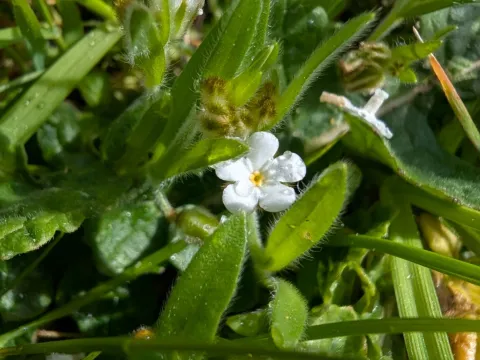
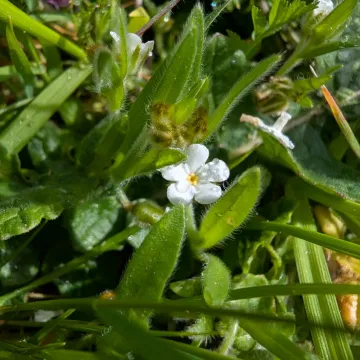
Botanically, Plagiobothrys canescens is characterized by its pubescent (hairy) stems and leaves, which provide a distinctive grayish appearance. The plant typically reaches a low to medium height and produces small, white, five-petaled flowers clustered in spike-like racemes. Its root system is designed for survival in arid environments, allowing it to tap into deep soil moisture.
Agricultural requirements center on mimicry of its natural habitat conditions. The crop requires full sun exposure and well-draining, sandy, or gravelly soil types. Cultivation management is generally low-input, avoiding the use of heavy fertilizers or systemic herbicides that could damage the sensitive soil microbiome essential for this plant's growth.
The primary agricultural and environmental use of this species involves the promotion of native wildflower strips to support native pollinators and beneficial insects. Typical pests may include various aphids or soil-borne pathogens, particularly when cultivation is attempted in poorly drained or overly damp conditions, which can induce fungal root decay.
- Requires full sun and excellent drainage.
- Adapted to poor, sandy, or rocky soil profiles.
- Minimal fertilizer requirements.
- Significant value for pollinator conservation.
Photo gallery