American basketflower
Plectocephalus americanus
Description
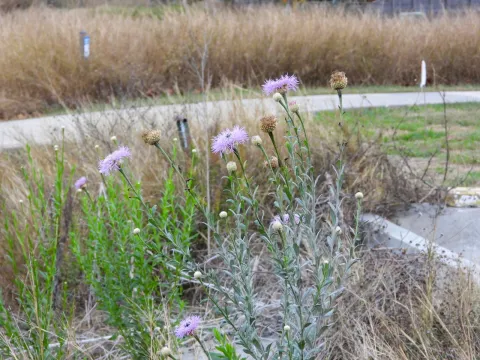
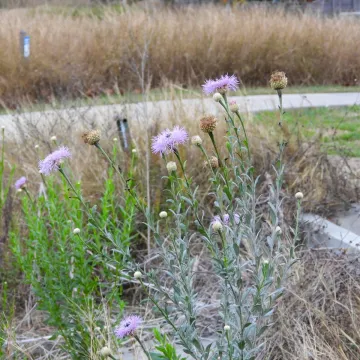
The American basketflower (Plectocephalus americanus) is a distinctive annual flowering plant belonging to the Asteraceae family. Known for its thistle-like appearance and large, fragrant, pinkish-purple blooms, it has become a favored plant among gardeners looking to introduce native North American flora into their landscapes.
Native to the prairies and open woodlands of the central and southern United States, this plant is well-adapted to wide-open spaces. Its natural habitat suggests that it thrives in regions with hot summers and well-drained soil, making it a robust candidate for xeriscaping and sustainable garden projects.
Botanically, the plant is characterized by its tall, sturdy stalks, often reaching heights of up to 4 feet. The leaves are alternate and lance-shaped, providing a structural base for the massive flower heads. These heads are protected by feathery, overlapping bracts, which gives the flower its unique "basket" appearance that differentiates it from other Centaurea species.
Agricultural success depends on providing full sun exposure and well-aerated, slightly alkaline soil. Unlike many intensive crops, the American basketflower does not require frequent fertilization. Over-fertilization can actually lead to weak stems that may collapse under the weight of the large blooms during periods of heavy rain or high wind.
Regarding pest and disease management, the plant is relatively hardy. However, in environments with poor air circulation and high humidity, powdery mildew can emerge. Standard preventative practices, such as ensuring proper plant spacing and avoiding overhead irrigation, are usually sufficient to maintain a healthy stand of American basketflower throughout the growing season.
Photo gallery