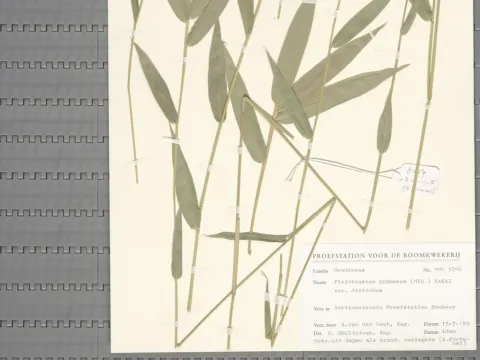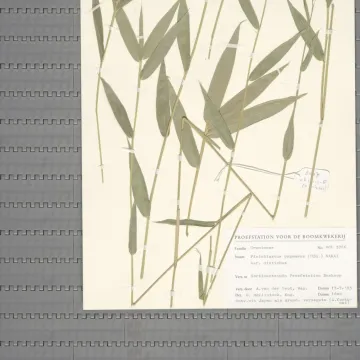

Pleioblastus distichus
Pleioblastus distichus
Description
Pleioblastus distichus is a species of dwarf bamboo belonging to the Poaceae family. Known for its distinct, orderly foliage arrangement, this plant is a popular choice for gardeners seeking a dense, carpet-like groundcover. It is widely recognized for its ability to create a lush, low-maintenance appearance in varied garden settings.
Native to Japan, this bamboo thrives in humid environments and forest understories. Its cultivation range has expanded globally into temperate regions where it is valued for its hardiness and evergreen nature. While it prefers sheltered spots, it is surprisingly adaptable to different light conditions, performing well in both full sun and partial shade.
Botanically, the species is defined by its small, lance-shaped leaves that grow in two distinct rows along thin, zig-zagging stems. The plant typically reaches heights of only 30 to 50 centimeters. It spreads vigorously through underground rhizomes, which allows it to form thick, impenetrable mats that are highly effective for erosion control on slopes.
The agricultural requirements for Pleioblastus distichus focus on soil moisture and containment. It thrives in fertile, well-drained soil with a slightly acidic to neutral pH. Gardeners must provide consistent irrigation, especially during dry spells, to prevent leaf browning. Because of its spreading nature, it is essential to install root barriers around the planting area to prevent it from invading unwanted spaces.
- Plant in moist, well-draining garden soil.
- Install root barriers to manage the spread of rhizomes.
- Apply mulch to retain soil moisture and regulate temperature.
- Prune annually in early spring to encourage fresh, dense growth.
The primary use of this species is in landscaping, where it serves as an excellent groundcover or border plant. It is frequently utilized to cover large patches of bare ground, prevent soil erosion, or add a structural, textural element to Japanese-style gardens and modern minimalist landscapes due to its neat, architectural appearance.
Common pests include spider mites, which can appear in hot and dry climates, and occasionally aphids. Maintaining optimal humidity and ensuring good air circulation around the plants helps prevent these infestations. While generally disease-free, plants may suffer from chlorosis if the soil pH is too high or if the roots are subjected to waterlogged conditions for extended periods.
Photo gallery