
Pleroma mutabile
Pleroma mutabile
Description
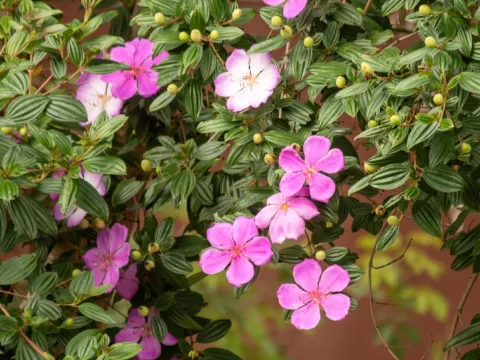
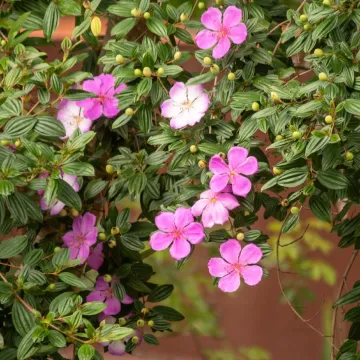
Pleroma mutabile, formerly known as Tibouchina mutabilis, is an ornamental shrub belonging to the Melastomataceae family. The plant is widely recognized for its unique floral behavior: the blossoms undergo a color transformation, transitioning from pure white to shades of pink and deep violet as they mature.
Originating from the Atlantic forest regions of Brazil, the plant thrives in tropical and subtropical climates characterized by consistent humidity and moderate warmth. In these environments, it grows as a robust evergreen shrub or small tree. Due to its striking appearance, it has been introduced as an ornamental species in various regions with similar climatic conditions.
Botanically, it features large, fuzzy, dark green leaves with pronounced longitudinal venation, a characteristic hallmark of the Melastomataceae family. The plant architecture can be maintained through regular pruning, which promotes denser branching and more prolific flowering. Its root system is delicate and requires well-aerated substrates.
Regarding cultivation requirements, Pleroma mutabile demands acidic, well-draining soil with a pH typically between 5.0 and 6.0. It is sensitive to soil alkalinity, which can lead to nutrient deficiencies like chlorosis. The plant prefers high humidity levels and should be protected from drying winds and harsh, direct sunlight during the hottest parts of the day.
In terms of agricultural use, this plant is strictly ornamental, often utilized in landscaping as a focal point or a feature hedge in mild climates. Potential pests include spider mites and scale insects, which are often encouraged by poor air circulation or low humidity. Effective management involves maintaining a stable microclimate and regular inspection of the leaf underside.
Photo gallery