Plukenetia corniculata
Plukenetia corniculata
Description
Plukenetia corniculata is a perennial climbing plant belonging to the Euphorbiaceae family. Often recognized as a botanical cousin to the better-known Sacha Inchi, this species is native to tropical regions of Southeast Asia. It is valued primarily for its potential as an oilseed crop, with its seeds possessing a unique fatty acid profile favored in local traditional diets.
The plant originates from tropical ecosystems, thriving in humid environments with consistent warmth. Its native range consists of forest fringes and clearings where it can climb toward canopy gaps. As a crop, it requires strict adherence to tropical climate conditions, as it lacks cold tolerance and exhibits poor growth patterns in temperate regions lacking stable high temperatures.
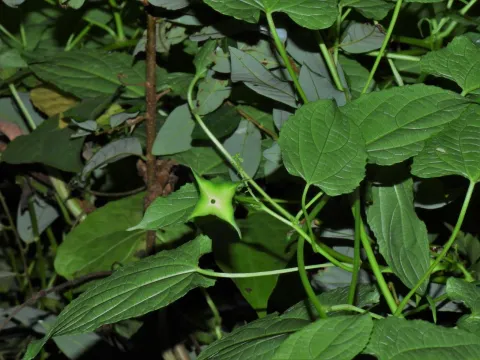
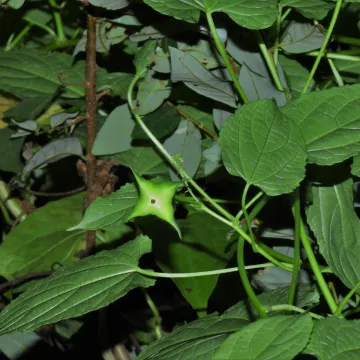
Botanically, it is a vigorous vine featuring cordate leaves and a climbing habit. The most distinct feature is its fruit: a capsule that often displays a horned structure, from which its common name is derived. The seeds are enclosed within these capsules and are highly prized for their oil content, which is rich in essential nutrients. The root system is relatively shallow, necessitating consistent soil moisture.
In terms of agricultural management, providing robust trellising is mandatory. Without vertical support, the biomass suffers from soil-borne pathogens and restricted photosynthesis. The soil should be fertile, well-draining, and rich in organic matter to support the rapid growth cycle of the vine. Pruning is often utilized to manage canopy density and facilitate efficient harvesting of the mature capsules.
The primary economic value lies in the production of high-quality vegetable oils. In addition to commercial interests, local communities have used various parts of the plant for traditional medicinal purposes. Management of pests and diseases is crucial for yield success, with common issues being:
- Root rot triggered by poor drainage.
- Leaf-spot pathogens in high-humidity seasons.
- Infestation by sap-sucking insects on younger leaves.
- Drought stress leading to premature flower drop.
Photo gallery